As a property owner, you need to be vigilant—and some of the most significant risks to a building’s structural integrity and the health of its occupants are not visible to the naked eye. One such hidden danger is microbial growth, a particularly ferocious foe that will, eventually, need the help of a professional mold removal. The entry of moisture into an indoor environment leads to the quick activation of fungal spores, initiating a destructive cycle of damage to building materials and a decline in indoor air quality.
Many property owners underestimate how fast and complex fungal growth can be, believing a quick wipe down with household cleaners will do the trick. This false belief is the root of many superficial and ineffectual DIY interventions that only make the problem worse.
Indoor contamination requires a sophisticated understanding of building science, psychrometrics, the study of moist air and its thermodynamic properties, and containment procedures. True remediation is much more than just surface cleaning. It takes a systematic approach to eliminate contamination at the source. This complete guide will explain why professional mold removal is absolutely essential for protecting your property and your health, and implementing a complete, long term strategy for mold damage restoration.
1. The Hidden Science of Microbial Growth
To grasp the necessity of professional intervention, one needs to examine the biological mechanisms of fungal organisms. Fungi are opportunistic organisms and are found everywhere in nature as microscopic spores. They play an important role in breaking down organic material in external ecosystems. However, when these spores find their way indoors and encounter a source of moisture, they are no longer beneficial and become a destructive indoor pollutant.
The Timeline of Proliferation
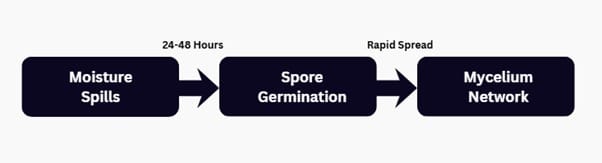
Fungal germination doesn’t wait for a convenient time. With the right conditions all it takes is moisture, a carbon based food source like drywall or wood, and stagnant air spores can germinate in as little as 24 to 48 hours. When a spore germinates, it sends out microscopic root like structures called hyphae. These hyphae quickly grow and interlace to form a visible network known as a mycelium.
A homeowner may notice a dark stain on a baseboard or a fuzzy patch behind a washing machine, but the contamination is already well established. There is probably a lot of mold damage under the surface that you cannot see.
The Inadequacy of Surface Treatments
The number one reason DIY attempts fail is not understanding porous and semi porous building materials. Think drywall, insulation, framing lumber, carpet padding, and ceiling tiles. All very porous. When fungi colonize these surfaces, the hyphae go deep into the structural matrix of the material. Much the same as the roots of a plant send their tendrils deep into the soil.
Spraying a porous surface with a topical disinfectant like household bleach treats only the surface growth. The water in the bleach solution usually penetrates the material and feeds the deep root system while the active chemical agent (sodium hypochlorite) stays on the surface. This creates a cycle of growth that continues over and over again, the organism coming back stronger each time, speeding up the overall mold damage to the building’s structural framing.
2. The Danger of DIY Failures
There are lots of home improvement blogs on the internet pushing quick and cheap fixes for indoor air quality problems. Unfortunately, the result of following this advice is often to make the original problem worse. Without industrial grade training and specialized equipment and strict adherence to safety standards, property owners attempting do it yourself remediation often spread widespread contamination throughout their homes without even knowing it.
Start of Spore Release
Fungi reproduce and live by releasing millions of tiny spores into the air around them. When an untrained person scrubs, scrapes or tears down contaminated building materials without proper containment, they trigger a defensive survival mode in the organism. The disturbed colonies emit a huge cloud of spores, mycotoxins, and microbial volatile organic compounds into the air.
Once airborne, these particles readily drift through the home via natural air currents and residential HVAC systems. A small corner of a basement that is a localized problem can rapidly turn into a whole house contamination crisis, cross contaminating living areas, upholstery, and ductwork. The wide dispersal of this makes subsequent professional mold remediation much more complicated and costly than if it had been done correctly the first time.
The hidden hazard of cross contamination
Cross contamination: the unseen fallout of uncontained DIY demolition. If a homeowner takes out a piece of contaminated drywall without a proper physical barrier, those microscopic spores drift into far rooms. They fall on rugs, furnishings, and clothes, where they lie dormant until the next little burst of moisture or increase in humidity prompts another round of growth.
As professional remediators know, a visible colony is only part of the problem. The real key to preventing long term property problems and ensuring a successful and permanent cleanup is controlling the invisible airborne load of particles.
3. Industrial Containment and Engineering Controls
The difference between an amateur cleanup and a certified professional intervention is primarily that strict engineering controls are applied. Your professional mitigation technician treats each project as a biohazard zone and uses advanced containment protocols to prevent cross contamination to the rest of the property.
Advanced Negative Pressure Enclosures
Technicians build sturdy isolation zones with heavy duty, 6 mil flame retardant polyethylene sheeting before touching any damaged material. These critical barriers are used to seal all doorways, windows, plumbing penetrations, and HVAC supply and return vents.
Once these physical barriers are put in place, professionals use industrial negative air machines with True HEPA filtration filters. They are heavy duty machines that pull air from within the contained work space, filter out microscopic contaminants, and vent the scrubbed air outside of the building. This creates a constant negative pressure environment.
The air pressure in the containment zone is lower than in the other areas of the house, so that clean air from outside the barrier is pulled into the work area and contaminated air is completely prevented from escaping into unaffected living areas.
Air Scrubbing Process
The negative air machines run 24/7 throughout the entire mold remediation process to clean the air inside the containment area. This constant filtering captures airborne spores, dust, and particulate matter as soon as they are disturbed. This precise control of air movement ensures there is no possibility of contaminants escaping into the surrounding environment, preventing spores from settling in adjacent rooms.
4. Advanced Diagnostic and Detection Technologies
Another key reason to avoid DIY methods is that an untrained homeowner cannot accurately pinpoint hidden water leaks and moisture pockets. Dark, unventilated areas are ideal for fungi to thrive, and they often grow in unseen places behind drywall, under flooring, in wall cavities, and deep in crawl spaces or drop ceilings. By trying to guess where the contamination stops, you are often left with a lot of hidden growth behind that renders any cleanup attempts useless.
Precision Moisture Infrastructure
Certified technicians employ a range of sophisticated non destructive diagnostic tools to identify concealed moisture patterns and trace the flow of water intrusion. These advanced technologies are:
- Infrared Thermography: Infrared thermal imaging cameras enable technicians to see unusual temperature differences within walls, ceilings, and floors. Wet building materials cool by evaporation and hence appear as distinct cool anomalies on a thermal map. This way, you can accurately track the movement of water without having to tear down walls before you need to.
- Probe and Pinless Moisture Meters: These specialized tools measure the exact moisture content in a variety of building materials such as wood, drywall, concrete, and masonry. Pinless meters scan large areas quickly with electromagnetic signals and don’t damage finishes, and pin type meters make deep measurements inside structural studs.
- Digital Hygrometers: These devices measure the exact relative humidity and temperature of the ambient air, allowing technicians to calculate dew points and vapour pressure gradients to ensure air conditions do not support fungal growth.
Documenting the True Scope of Fungal Accumulation
This combination of diagnostic tools allows professionals to precisely map the boundaries of hidden damage. This diagnostic process ensures that the cleanup treats all areas of fungal activity, preventing any hidden pockets of decay from further damaging the home’s structural framing.
Thorough diagnostics are critical to successful mold damage restoration, ensuring all hidden problems are completely addressed. This scientific certainty is what a standard visual inspection simply cannot offer.
5. Comprehensive Structural Remediation Protocols
Once diagnostics are complete and containment is secured, the actual physical cleanup process can start. The stage demands careful attention to detail, as per the industry standards like the IICRC S520 Standard for Professional Mold Remediation. It is not enough to kill the organism; the goal is to physically remove it completely from the indoor environment.
The Precision Demolition Process
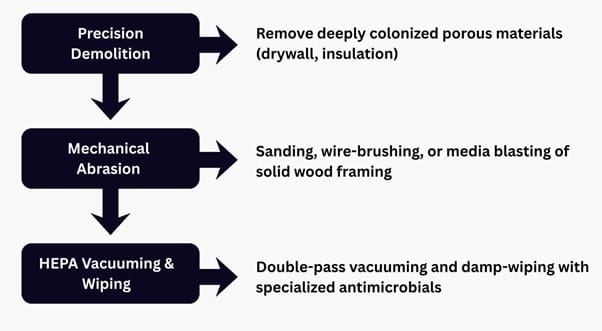
Porous building materials that are heavily colonized and degraded should be carefully removed and discarded. This includes contaminated drywall, wet fiberglass insulation, blown in cellulose and water logged carpet. Before they’re removed, technicians spray these materials with an antimicrobial solution to contain dust and limit spore release.
The debris is then placed into heavy duty disposal bags, sealed tightly and wiped down before being carried through the home and out of the containment area. This prevents any accidental cross contamination during the disposal route.
Cleaning Structural Elements
Structural elements such as heavy timber framing, subfloors, concrete foundation walls, and other non porous and semi porous materials cannot be removed easily without jeopardizing the stability of the building. These elements undergo extensive physical remediation by means of sophisticated mechanical methods:
- Mechanical Abrasion: Technicians use specialized wire brushes, detail sanders, or advanced media blasting to physically shave away the colonized outer layers of the wood.
- HEPA Vacuuming: After the abrasion, all surfaces are vacuumed thoroughly with special vacuums equipped with true HEPA filters. Standard household shop vacs are completely unsuited for this task, as their filters will not trap microscopic spores and will merely blow them back into the air.
- Antimicrobial Washdown: Other structural surfaces hand wiped with professional strength EPA registered biocides and antimicrobials. These advanced solutions are engineered to penetrate wood grains and remove remaining microscopic roots without degrading the material itself.
This complete physical cleaning process ensures that the structural framing is entirely cleaned and ready for reconstruction so that hidden fungal colonies will not return later.
6. Addressing the Root Cause: Moisture Dynamics
Any attempt to remove the mold will be doomed to failure unless the source of moisture behind it is found, fixed, and dried out completely. Fungi require water to grow. Simply removing the contaminated materials and leaving a slow pipe leak, a foundation crack, or high indoor humidity will ensure new spores will germinate on the new materials within days of reconstruction.
Drying the Structural Elements
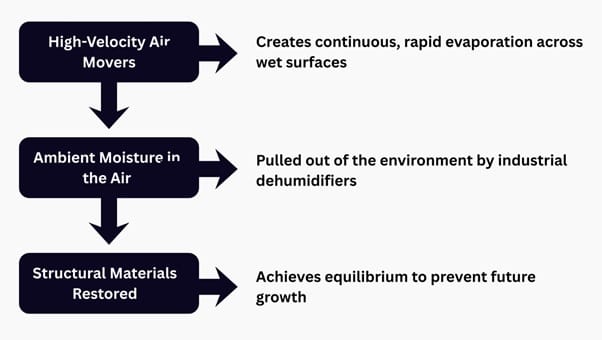
Professional remediation companies don’t just rip out damaged drywall and run away. They are experts in property restoration and drying science. High velocity axial air movers dry remaining structural framing using high capacity industrial refrigerant or desiccant dehumidification.
These sophisticated machines produce a perfect low humidity environment, pulling trapped moisture from deep inside wood framing studs and subfloors. The drying process is monitored daily by technicians who measure the moisture levels until the materials reach a dry standard.
Long Term Humidity Solutions
As well as drying out the initial water intrusion, a professional will also assess the property for long term humidity problems that could lead to future growth. This is especially true in areas that tend to be damp, such as crawl spaces and basements.
Technicians may suggest more advanced options like encapsulating the crawl space, installing tough vapor barriers, or installing dedicated, self draining dehumidification systems. Professionals maintain the indoor climate and moisture dynamics of the property, protecting your home from future structural problems and securing your investment for years to come.
7. Navigating Property Insurance and Documentation
Dealing with property damage is stressful, and wading through the intricacies of homeowner’s insurance claims can often seem like an uphill battle. Most policyholders don’t realize that the insurance companies require very accurate and detailed documentation before they will pay for any work restoring the property. Insurance adjusters need data that can be verified, and informal DIY cleanups just don’t have that. This most of the time means denied claims and big out of pocket expenses.
Professional Project Documentation
Certified remediation companies provide the homeowner with a complete documentation package listing every step of the project. This critical record serves as official proof of proper mitigation and includes:
- Detailed Moisture Logs: Daily recordings of temperature, relative humidity, and moisture content of the materials. This shows that the structure was totally and scientifically dried to pre loss conditions.
- Comprehensive Photo Evidence: Clear photographs before, during, and after to demonstrate the extent of damage, the construction of containment zones, and the completion of cleanup.
- Detailed Scope of Work: Provide a detailed line by line explanation of all removed materials, treated areas, and equipment used, utilizing industry standard estimating platforms.
Simplifying the Insurance Claims Process
This institutional documentation process makes the claims process more efficient. Many well established restoration professionals work directly with insurance adjusters on your behalf. They know the exact terminology and evidence needed to justify coverage so you receive the maximum benefits your policy will allow.
Also, if you ever decide to sell your home, having an official certificate of completion from a certified firm is invaluable since it shows future buyers and mortgage lenders that the home was properly restored to a safe condition.
8. Financial and Structural Realities: Professional vs. DIY
In the face of unexpected property damage, it is common to look for an inexpensive solution. Homeowners often see DIY cleanup as a cost saving measure. But when you consider the real cost of equipment and materials, and the risk of long term damage, a DIY fix is often a very costly error.
The following table compares the tools, safety measures, and financial risks of a DIY attempt versus a certified professional intervention:
Category | DIY Approach | Professional Approach |
Diagnostic Equipment | Visual inspection, basic hardware store moisture meters. | Flir infrared thermal cameras, calibrated pin/pinless moisture meters. |
Containment Quality | None, or loose plastic sheeting attached with standard painter’s tape. | Sealed, 6 mil poly critical barriers utilizing negative air pressure machines. |
Air Filtration | Household vacuums or standard shop vacs (re distribute fine spores). | High capacity air scrubbers equipped with certified, true HEPA filtration. |
Chemical Solutions | Household bleach or generic retail sprays (fuel growth in porous materials). | EPA registered, commercial grade biocides and structural encapsulants. |
Insurance Compliance | Zero documentation; high risk of claim denial or policy cancellation. | Full digital moisture logs, photo arrays, and industry standard documentation. |
Long Term Financial Risk | High risk of recurring growth, structural rot, and decreased home resale value. | Fully backed by warranties, structural integrity preserved, and certified clearance. |
The Real Cost of Secondary Damage
An uncontained DIY cleanup can have serious financial implications in the long run. If you install new drywall over wood framing studs that are still wet, wood rotting fungi will continue to grow behind the drywall. This active decay degrades the wood framing over time, leading to sagging floors, bowed walls, and eventually major structural repairs that can cost thousands of dollars.
Not disclosing a history of water damage or unverified DIY cleanup records can also severely harm your home’s resale value. Smart home inspectors will see covered up problems right away, and those can kill a home sale or lead to steep price cuts. Choose professional cleanup from the beginning, and you’ll save the integrity of your building and your equity in the long run.
9. Comprehensive Health and Environmental Safety
Besides the financial or structural risks, the most important reason to choose professional restoration is the health and safety of everyone living in the home. Fungal infestations are far more than a cosmetic issue; they are a major contributor to indoor air pollution with serious implications for well being.
The Respiratory Impact of Indoor Contaminants
Colonies grow and shed spores, fragments, and cell wall components into the indoor air. When inhaled, these microscopic particles can cause a range of health problems, particularly for susceptible groups, such as young children, the elderly, pregnant women, and people with existing respiratory conditions such as asthma or allergies.
Common symptoms of exposure include a persistent cough, wheezing, nasal congestion, throat irritation, and severe headaches. In heavily contaminated environments, some strains of fungi can produce dangerous compounds called mycotoxins. If left unattended, these toxic byproducts can build up in the indoor environment to create a hazardous living space that requires advanced biohazard cleanup protocols.
Comprehensive Personal Protective Equipment (PPE)
During cleanups, professional remediation technicians wear the most current personal protective equipment to safeguard their health. This complete body protection includes:
- Full Face Respirators: Complete protection against microscopic spores, toxins, and airborne dust particulates with N100 or HEPA filters.
- Protective Body Suits: High density polyethylene suits that are breathable, but prevent spores from being carried in on clothing into clean zones.
- Specialized Heavy Duty Gloves: sealed gloves attached to suit sleeves to prevent any direct skin contact with contaminants or biocides.
Homeowners in simple dust masks and household clothes do not have this protection and are exposed to huge concentrations of contaminants during demolition.
10. The Final Verification: Clear Testing Protocol
The last step to a successful mold remediation project is independent post remediation verification testing. A professional cleanup isn’t truly complete until independent scientific data confirms that indoor air quality is back to safe, normal levels.
Independent Third Party Air Sampling
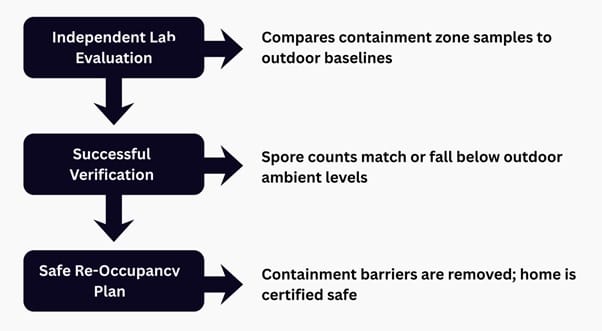
Reputable restoration companies do not do their own final clearance testing, as that would be a conflict of interest. Instead, they have independent third party industrial hygienists or certified environmental professionals do unbiased testing.
This verification process requires the collection of several air volume samples from within the contained work zone and baseline samples from outside the home for comparison. The samples are then sent to an accredited lab for microscopic analysis to determine the exact spore counts per cubic meter.
Achieving True Peace of Mind
For a successful clearance test, the number of spores inside the containment area must be at most equal to the number of spores in the outside ambient air, and the ideal is to have no target contaminants in the containment area. When the lab provides this official clearance certificate, the containment barriers may be safely removed, and reconstruction can begin.
This scientific verification gives you total peace of mind, proving your home is safe, clean, and healthy for your family. You can’t get this verifiable assurance with DIY cleanups.
Choosing Professional Restoration Expertise
The answer to an indoor environmental crisis requires a determined, scientifically sound response. It’s easy to see why DIY fixes are appealing, but the risks of spreading contamination, causing structural damage, and putting your family’s health at risk are simply too great. True restoration requires advanced containment, precise diagnostic tools, and a complete understanding of drying science.
If you suspect concealed water problems or see active fungal growth on your property, don’t wait for the damage to spread. Call the certified team at Vortex Restoration at 805-443-8055 for an immediate professional inspection.
Our Ventura and Santa Barbara Counties mold removal, structural drying, and mold damage restoration technicians are trained and certified to provide complete mold removal services.