You found mold. Maybe it is a dark patch spreading across a bathroom ceiling, a musty smell in a closet that will not go away or a spot that showed up after last winter's leak. The very next question is almost always the same: how much is this going to cost?
The honest answer is that mold remediation cost varies a lot from one home to the next, and anyone who quotes you a firm price over the phone without seeing the problem is guessing. What we can do is explain exactly what drives the price, so you understand an estimate when you get one, know what questions to ask and can make choices that keep the bill as low as possible.
Why There Is No One-Size Price for Mold Remediation
Two homes can have mold patches that look identical from the outside and end up with very different estimates. One might be surface growth on a single wall from bathroom humidity. The other might be the visible tip of a colony that has been growing inside the wall cavity for months behind a slow plumbing leak.
Mold remediation is priced based on the work it takes to remove the growth safely, fix what caused it and keep spores from spreading to the rest of the house. That work depends on the factors below.
The 8 Factors That Determine Mold Remediation Cost
1. Size of the affected area
This is the biggest driver. The EPA's mold cleanup guidance notes that homeowners can usually handle a moldy area smaller than about 10 square feet, roughly a 3 by 3 foot patch, but that larger areas or growth tied to significant water damage call for a more involved approach. Larger areas mean more containment, more material removal, more labor and more equipment time.
2. Location in the home
Mold in an open, easy-to-reach space costs less to remediate than mold in a tight or hard-to-access area. Attics, crawl spaces, behind cabinets, under flooring and inside HVAC systems all add time, labor and sometimes extra equipment.
3. What the mold is growing on
Mold on nonporous surfaces like tile, glass or metal can usually be cleaned. Mold on porous materials like drywall, carpet, insulation and ceiling tiles generally has to be cut out and replaced. The more material that needs to come out, the higher the cost.
4. Hidden growth
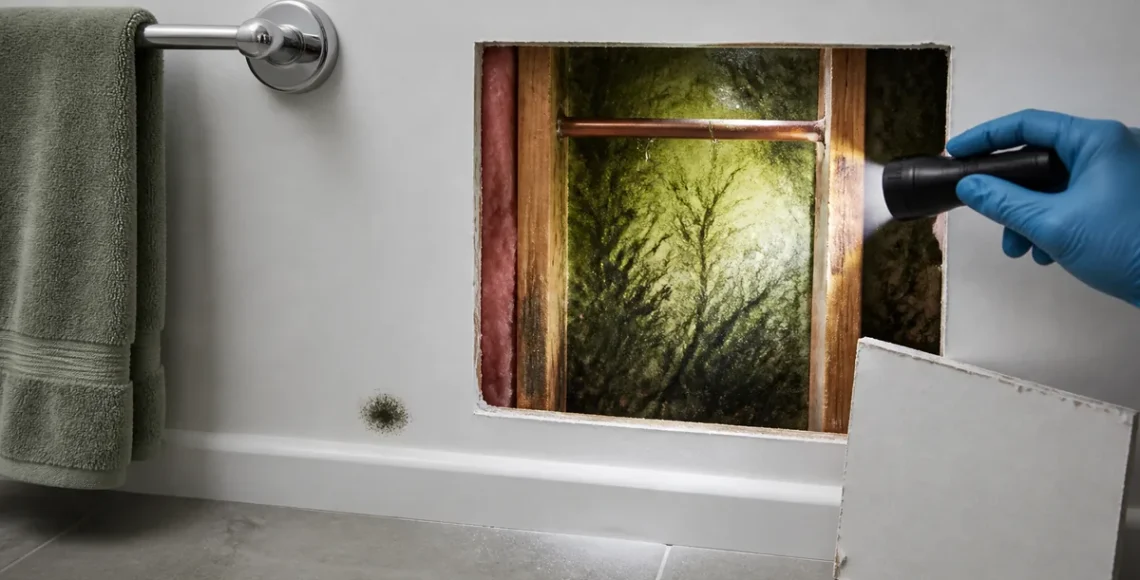
Visible mold is often only part of the story. Moisture meters, thermal imaging and small openings in the wall can reveal growth inside walls, under floors or above ceilings. Hidden growth expands the scope, but finding it now is far cheaper than discovering it after new drywall and paint go up.
5. The moisture source
Mold always comes back if the moisture that caused it is still there. Fixing the source, such as a leaking pipe, a roof leak, poor bathroom ventilation or a damp crawl space, is part of a complete solution. Some sources are simple; others require a plumber, roofer or encapsulation work.
6. Containment and air filtration needs
Proper remediation keeps spores from spreading to clean areas. That means plastic containment barriers, negative air pressure and HEPA air filtration. Larger or more severe jobs need more extensive containment, which affects mold remediation cost.
7. Independent testing, if needed
Not every job requires lab testing, but some do. Testing may be recommended when you smell mold but cannot see it, when someone in the home has health concerns or when you need clearance documentation after the work is done, for example before selling a home or when a landlord and tenant are involved. Testing is done by an independent, licensed mold assessor, not by the remediation company, and it is billed separately from the remediation itself.
8. Rebuild and repairs
Once the affected materials are removed and the area is cleaned and verified, the space has to be put back together. Drywall, insulation, baseboards, flooring and paint are part of the total project, even if they are sometimes quoted separately.
What Professional Mold Remediation Includes
When you compare estimates, make sure you are comparing the same scope of work. A complete mold remediation project should include:
- Moisture mapping to define the full extent of growth and find the source.
- Containment with sealed barriers and negative air pressure to protect the rest of the home.
- HEPA air filtration running throughout the job.
- Removal of contaminated porous materials and bagging for proper disposal.
- Cleaning and treatment of remaining surfaces and framing.
- Drying of any materials that are still damp.
- Final verification that the area is clean before rebuilding starts.
- Documentation, including photos and a written scope, which is valuable for insurance and future home sales.
If an estimate looks surprisingly low, check what is missing. Spraying a product on visible mold and painting over it is not remediation, and it usually leads to the problem coming back.
Is Black Mold Removal More Expensive?
"Black mold" is a common name people use for dark-colored mold, and many molds are dark. Color alone does not determine the species or the risk, and it does not, on its own, change how remediation is done. Black mold removal follows the same professional process as any other mold remediation: contain, remove, clean, dry and verify. What changes the cost is the size, location and materials involved, not the color.
Does Insurance Cover Mold Remediation?
Sometimes. Coverage usually depends on what caused the mold.
- Often covered: mold resulting from a sudden and accidental event that your policy covers, such as a burst pipe or appliance supply line failure, especially when you reported and addressed the water damage promptly.
- Often not covered: mold from long-term leaks, ongoing humidity, deferred maintenance or flooding from outside water if you do not carry flood coverage.
Many policies also have specific mold limits or exclusions. Read your policy, call your agent and ask directly. If mold followed a covered water loss, detailed documentation from your restoration company can make a big difference in how the claim is handled.
How to Keep Mold Remediation Cost Down
You cannot change the size of the problem you already have, but you can avoid making it bigger and more expensive.
- Act fast. Mold can begin to grow on damp materials within 24 to 48 hours, and it keeps spreading as long as moisture is present. The sooner it is addressed, the smaller the job.
- Do not disturb it. Scrubbing, sanding or tearing out moldy drywall without containment can send spores throughout the house and turn a one-room job into a multi-room job.
- Do not paint over it. Paint hides mold but does not stop it, and it can make the true extent harder to assess later.
- Fix water problems immediately. Leaks, drips and wet crawl spaces are the root cause of most indoor mold.
- Control humidity. Run bathroom exhaust fans, use a dehumidifier in damp areas and keep an eye on spaces near the coast where humidity runs high.
- Get a detailed, written estimate. A clear scope protects you from surprises and makes estimates easy to compare.
What to Ask Before You Hire a Mold Remediation Company
- Are your technicians IICRC certified?
- Are you licensed, bonded and insured?
- How will you contain the work area?
- Will you find and address the moisture source?
- What exactly is included in your estimate, and what is quoted separately?
- How do you verify the job is complete?
- Do you work with insurance companies and provide documentation?
A trustworthy company will answer all of these clearly and put the scope in writing before work begins.
Frequently Asked Questions About Mold Remediation Cost
How much does mold remediation cost?
Mold remediation cost depends on the size of the affected area, where it is located, what materials are involved, whether there is hidden growth and what it takes to fix the moisture source. Small surface jobs cost far less than whole-room or crawl space projects. An on-site estimate is the only way to get an accurate price for your home.
Why do mold remediation estimates vary so much?
Estimates vary because the scope of work varies. One company may include containment, HEPA filtration, moisture source repair and verification, while another only cleans visible growth. Hidden mold inside walls or under flooring can also change the scope. Always compare estimates line by line to make sure you are comparing the same work.
Can I remove mold myself to save money?
The EPA notes that homeowners can usually handle mold covering less than about 10 square feet on their own with proper precautions. Larger areas, mold tied to significant water damage, mold in HVAC systems or growth caused by sewage or contaminated water should be handled by professionals to avoid spreading spores.
Who handles mold testing, and what does it cost?
Mold testing is done by an independent, licensed mold assessor, and the cost depends on the size of the home, how many areas need to be evaluated and how many samples go to the lab. We do not perform mold testing or inspections. If testing is needed, we can work alongside an independent mold assessor, and we handle the removal and remediation.
Does homeowners insurance cover mold remediation?
It depends on the cause. Mold resulting from a sudden, covered water event, like a burst pipe, is more likely to be covered, especially if reported promptly. Mold from long-term leaks, humidity or poor maintenance is often excluded, and many policies cap mold coverage. Check your policy and talk with your agent.
Is black mold more expensive to remove?
Not because of its color. Many molds are dark, and the color does not determine how remediation is done. The cost of black mold removal depends on the same factors as any mold job: how large the area is, where it is, what it is growing on and what caused it.
How long does mold remediation take?
Small, contained jobs can often be completed in one to two days. Larger projects that involve removing drywall, cleaning framing, drying and rebuilding can take a week or more. The timeline depends on the size of the area, the materials involved and whether the moisture source requires separate repairs.
Will mold come back after remediation?
Mold can return if the moisture source is not fixed. That is why a complete remediation includes finding and addressing the cause, whether it is a leak, poor ventilation or a damp crawl space. After remediation, keeping humidity in check and repairing leaks quickly are the best ways to keep mold from coming back.
Do I need to leave my home during mold remediation?
For small, well-contained jobs, most families can stay home. For larger projects, work in main living areas or when someone in the household has respiratory or immune concerns, staying elsewhere during the work may be the safer option. Your remediation team can advise you based on the scope.
How do I get an accurate mold remediation estimate in Ventura County?
Schedule a free on-site estimate with a local, IICRC certified company that will measure the affected area, check for hidden moisture and give you a written scope. Vortex Restoration offers free estimates throughout Ventura and Santa Barbara Counties, including Camarillo, Oxnard, Thousand Oaks, Simi Valley and Ventura.
Get a Clear, Written Estimate for Your Home
You should know exactly what you are paying for before any work begins. Our team will look over the affected area, check for hidden moisture, explain what we find in plain language and give you a written scope with no surprises. Learn more about our mold removal and remediation services, including how we contain, remove and verify every job.
Call Vortex Restoration at 805-443-8055 for a free estimate. We are locally owned in Camarillo, IICRC certified and available 24/7 across Ventura and Santa Barbara Counties.