It usually starts with a gurgle. A toilet that will not drain, a shower that fills with dark water, a floor drain that starts bubbling up something you really do not want to see. A sewage backup is one of the most stressful things that can happen in a home, and the decisions you make in the first hour have a big effect on your family's health and the cost of repairs.
This guide walks through what causes backups, what to do immediately, what you should never try to clean yourself and what professional sewage backup cleanup actually involves. We also cover why backups become more common in Ventura County once the rainy season arrives.
Why a Sewage Backup Is Different From Other Water Damage
Water damage from a clean supply line and water damage from sewage are not the same problem. Sewage is classified as Category 3 water, sometimes called black water. It can carry bacteria, viruses, parasites and other contaminants that make people sick through contact, splashing or breathing in droplets.
That changes everything about the cleanup. With clean water, many materials can be dried and saved. With sewage, porous materials it soaks into, like carpet, carpet pad, drywall and insulation, generally need to be removed and disposed of. The industry standard for water damage restoration, the IICRC S500 Standard for Professional Water Damage Restoration, describes the procedures and precautions restorers follow, including how contaminated water must be handled.
What Causes Sewage Backup?
Understanding what causes sewage backup helps you prevent the next one and tells the cleanup crew where to look.
Clogs in your own line
- Grease and food waste poured down kitchen drains harden inside pipes over time.
- "Flushable" wipes, paper towels and hygiene products do not break down the way toilet paper does.
- Buildup inside older pipes narrows the line until it finally closes off.
Tree roots
Roots grow toward moisture and can work their way into small cracks or joints in a sewer lateral. Over time they form a dense mat that catches debris and blocks flow. Homes with mature trees near the sewer line are especially vulnerable.
Damaged or aging pipes
Older clay or cast iron lines can crack, sag or collapse. A belly, or low spot, in the line lets waste collect until it backs up into the house.
Municipal system overload
During heavy storms, rainwater can overwhelm municipal sewer systems. When the main line fills, sewage can push back up through the lowest drains in homes connected to it. That is why sewage backups tend to spike during Ventura County's rainy season, often in homes with no history of problems.
What to Do in the First Hour
If you are dealing with a sewage backup right now, here is what to do, in order.
- Get people and pets away from the area. Keep children, older adults and anyone with a weakened immune system out of the affected space entirely.
- Stop using water. Do not flush toilets, run faucets, start the dishwasher or do laundry. Every gallon you send down the drain has nowhere to go but back into the house.
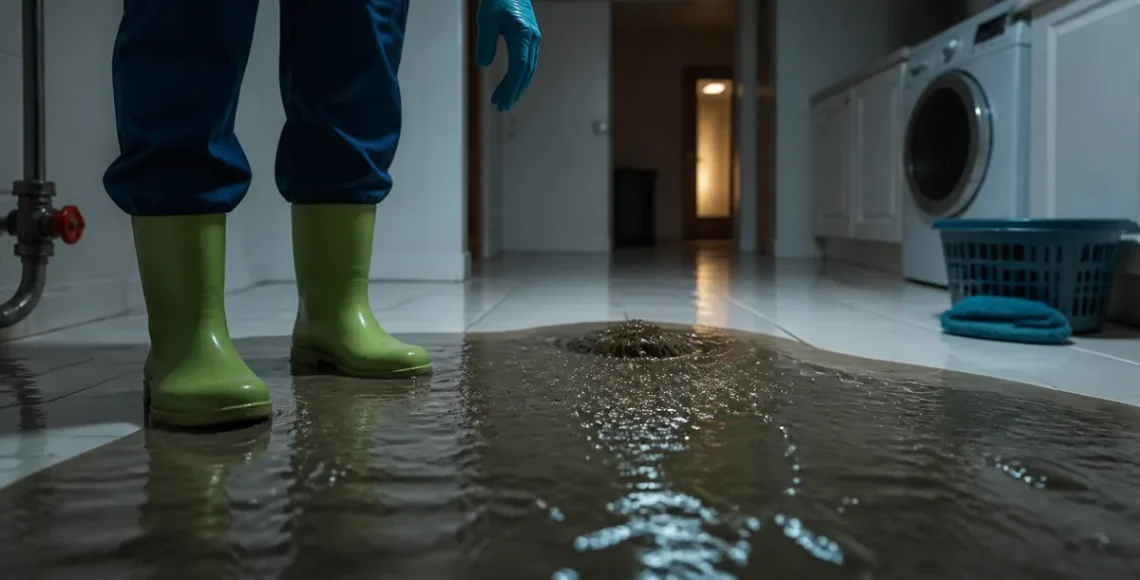
- Avoid contact. Do not walk through the water barefoot or touch it without gloves. If you have to enter the area, wear rubber boots, waterproof gloves and eye protection.
- Watch for electrical hazards. If sewage is near outlets, cords or appliances, do not touch them. Shut off power to the area at the panel only if you can reach it without standing in water.
- Turn off the HVAC system if returns or ducts are in or near the affected area, so contaminated air is not circulated through the home.
- Document the damage. Take photos and video of the water, the affected rooms and damaged belongings before anything is moved.
- Call for help. Contact a plumber to clear the blockage if the cause is in your line, your insurance company to open a claim and a restoration company to begin sewage backup cleanup.
What Never to Touch, Use or Do
Well-meaning homeowners often make sewage situations worse. Avoid these common mistakes:
- Do not use a household vacuum or shop vac on sewage unless it is rated for contaminated water. You can contaminate the machine and spread bacteria through the exhaust.
- Do not mix cleaning chemicals. Bleach combined with ammonia or other cleaners can produce toxic fumes, especially in small, enclosed bathrooms.
- Do not try to save soaked carpet or pad. Once sewage soaks in, those materials are generally not salvageable.
- Do not turn fans on the area before it is cleaned. Moving air can spread contaminants into clean rooms.
- Do not wait it out. Sewage that sits starts to smell worse, soaks deeper into building materials and gives bacteria and mold more time to grow.
Professional Sewage Backup Cleanup, Step by Step
A proper sewage cleanup follows a careful sequence designed to protect your family and the parts of the home that were not affected.
Step 1: Safety assessment and containment
The crew evaluates the scope of contamination, checks for electrical and structural hazards and sets up containment barriers so nothing gets tracked into clean areas. Technicians wear personal protective equipment throughout the job.
Step 2: Waste and water extraction
Contaminated water and solid waste are removed using equipment designed for black water. Extraction is followed by disposal in accordance with local regulations.
Step 3: Removal of affected materials
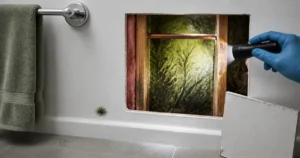
Porous materials that sewage touched, such as carpet, pad, the lower portion of drywall, baseboards and insulation, are cut out and removed. This is called a flood cut on walls, and it lets technicians reach and clean the wall cavity behind the drywall.
Step 4: Cleaning and disinfection
Every remaining surface in the affected area is cleaned and treated with professional-grade antimicrobial products. That includes subfloors, framing, concrete, fixtures and any hard contents being saved.
Step 5: Structural drying
Commercial dehumidifiers and air movers dry the structure, and moisture readings are taken daily until materials reach normal levels. Skipping this step leaves the door open for mold growth.
Step 6: Odor control and verification
Once the area is clean and dry, lingering odors are addressed and the space is checked before rebuilding begins.
Step 7: Repairs and rebuild
Drywall, baseboards, flooring and finishes are replaced so the room looks and functions like it did before the backup.
How to Prevent the Next Backup
You cannot control the municipal system, but you can reduce your risk.
- Only flush toilet paper. No wipes, even if the package says flushable.
- Keep grease out of the drain. Let it cool, then throw it in the trash.
- Schedule a camera inspection of your sewer lateral if your home is older or has large trees nearby.
- Ask a plumber about a backwater valve. It lets wastewater flow out but helps keep sewage from flowing back in during a municipal overload.
- Know your cleanout location so a plumber can get to the line quickly in an emergency.
Is Sewage Backup Covered by Insurance?
It depends on your policy. Many standard homeowners policies exclude damage from water or sewage that backs up through drains, unless you have added a specific sewer or water backup endorsement. Some policies cover the resulting damage but not the repair of the pipe itself. Call your agent, ask directly about water backup coverage and consider adding it if you do not have it.
When you do file a claim, detailed photos, moisture readings and a written scope of work from your restoration company make the process much smoother.
Frequently Asked Questions About Sewage Backup Cleanup
Is sewage backup dangerous?
Yes. Sewage is Category 3 water that can carry bacteria, viruses and parasites. Contact with skin, splashes to the eyes or mouth and breathing in contaminated droplets can all cause illness. Keep children, pets, older adults and anyone with a weakened immune system away, and leave sewage backup cleanup to trained, properly equipped professionals.
What causes sewage backup in a house?
The most common causes are clogs from grease, wipes and other non-flushable items, tree roots growing into the sewer lateral, cracked or sagging older pipes and municipal sewer systems that become overloaded during heavy rain. A plumber can use a camera inspection to find the specific cause in your line.
Can I clean up a sewage backup myself?
A very small backup confined to a toilet or tub on a hard, nonporous surface can sometimes be handled with protective gear and proper disinfectant. Anything that reaches carpet, drywall, a crawl space or multiple rooms needs professional cleanup, because porous materials must be removed and the area properly disinfected and dried.
How long does sewage backup cleanup take?
Extraction and removal of affected materials usually happen on the first day. Disinfection and structural drying commonly take several more days, depending on how far the sewage spread and what it soaked into. Repairs and rebuilding add time on top of that. Larger losses take longer from start to finish.
Should I stay in my home during sewage cleanup?
If the backup is limited to one area that can be sealed off and you have a working bathroom elsewhere, many families can stay. If sewage affected main living areas, the only bathroom or the HVAC system, or if anyone in the home is medically vulnerable, staying elsewhere until cleanup is complete is the safer choice.
Can carpet be saved after a sewage backup?
Generally, no. Carpet and carpet pad that sewage has soaked into are porous and cannot be reliably decontaminated, so they are removed and disposed of. Some hard flooring, tile and nonporous surfaces can be cleaned and disinfected. A restoration technician will tell you what can be saved after an inspection.
Who do I call first, a plumber or a restoration company?
Call both. The plumber clears the blockage or repairs the line so the backup stops. The restoration company handles extraction, removal of contaminated materials, disinfection and drying. If water is still actively coming up, stop using water in the house and contact a plumber right away.
Why do sewage backups happen more during the rainy season?
Heavy rain can seep into sewer lines through cracks and connections and overwhelm municipal systems. When the main line is overloaded, sewage can be pushed back up through the lowest drains in connected homes. Homes that never had a problem can experience a backup during a major storm.
Does homeowners insurance cover sewage backup cleanup?
Many standard policies exclude sewage backup unless you have added a water or sewer backup endorsement. Some policies cover the resulting damage but not the pipe repair. Review your coverage with your agent before you need it, and document everything thoroughly with photos if you need to file a claim.
Do you provide emergency sewage backup cleanup near me?
Yes. Vortex Restoration offers 24/7 emergency sewage backup cleanup across Ventura and Santa Barbara Counties, including Camarillo, Oxnard, Ventura, Thousand Oaks, Simi Valley and Moorpark. We work directly with your insurance adjuster.
Get It Cleaned Up Safely, Tonight
A sewage backup is not something to tackle with a mop and a bottle of bleach. Vortex Restoration provides complete sewage clean up services with IICRC certified technicians who contain the area, remove contaminated materials, disinfect, dry and restore your home.
Call 805-443-8055 any time, 24/7, for emergency service. We are locally owned in Camarillo and serve homes and businesses throughout Ventura and Santa Barbara Counties.