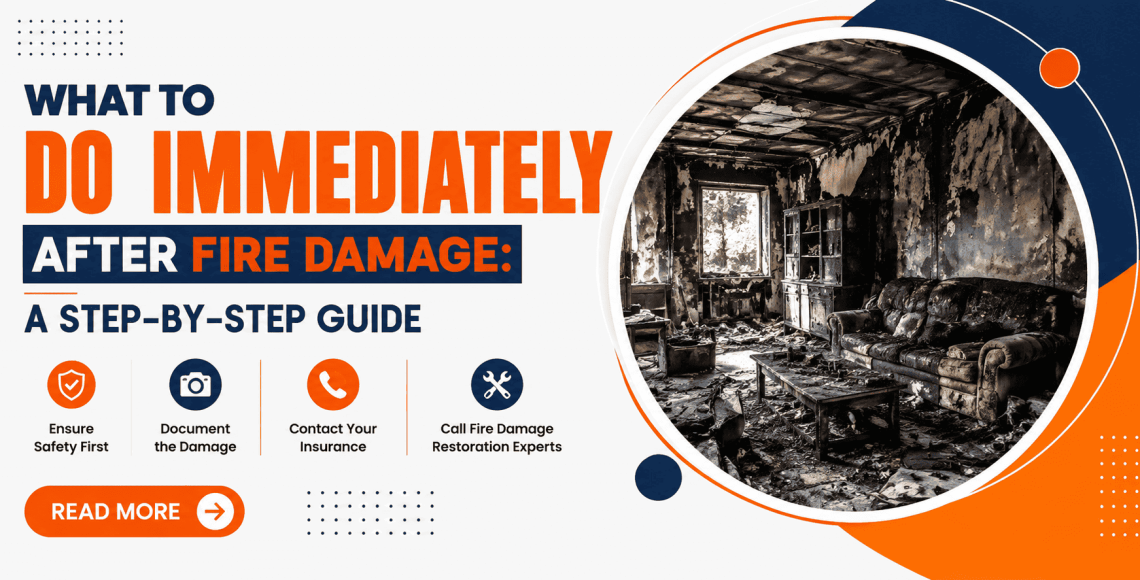
A residential fire is one of the most devastating and traumatic events a homeowner can experience. Right after a fire, when the flames are gone, and the fire trucks are leaving, property owners are left with a messy scene of smoke and soot, standing water, and unstable structures. The decisions made in the first 24 to 48 hours after a property disaster are critical and have a direct impact on occupant safety, the success of structural recovery from fire damage, and the outcome of property insurance claims.
When fire suppression teams depart, many property owners are unprepared for the difficult challenges that are left behind. The damage doesn’t stop when the fire is extinguished. Acidic soot residues, toxic smoke odors, and chemical fire retardants keep eating away at building materials and destroying personal items.
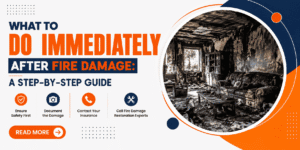
Navigating this process requires immediate action to ensure safety, thorough documentation, and proper mitigation of the property. This guide will take you through a step by step plan on what to do after the fire occurs and how to make sure that your investment is protected.
1. Safety and Structural Authorization: The First Response
The immediate concern after a residential fire is the safety of the people involved. While it is natural to want to get inside the home straight away to check possessions, the property is a very dangerous place even when the fire is out. If you go on the property too soon, you could be seriously injured or make the damage worse because of hidden dangers.
Wait for Official Clearance
Never re enter a fire damaged home under any circumstances until the local fire department or building inspector has officially declared the structure safe to enter. Firefighters can cut holes in roofs to ventilate and knock down walls to find hidden hot spots. The actions, combined with the heat of the fire, can weaken the structural integrity of floors, ceilings, and support beams.
On the exterior, a house may appear to be intact, but it may have structural failures on the inside that could make it unsafe to enter without professional supervision.
Managing Utilities Safely
Electrical wiring, gas lines and plumbing networks can be severely damaged by fire. If not already done by the fire department, turn off all main utility valves and switches. Don’t try to re activate the utilities yourself.
Damaged electrical systems can cause secondary fires or severe electrical shocks, and compromised gas lines can lead to gas leaks and dangerous explosions. Don’t turn on utilities until certified technicians and your utility companies’ reps have inspected the entire network and made all necessary repairs.
2. Immediate Outreach: Mobilizing Your Recovery Team
Once you know that the structure is stable and secure, your next immediate step is to build your support and recovery team. A property loss of this magnitude needs clear communication with insurance representatives and specialized structural restoration professionals from the beginning.
Contact Your Insurance Provider
Immediately contact your homeowners’ insurance to report the loss and start the claims process. Give the agent specific factual information about the event, including the date and time of the fire and the official fire department report number.
Ask your claims representative for a copy of the declaration page and policy booklet of your policy to review your coverage limits, deductibles, and specific requirements for emergency mitigation. This early conversation makes sure you follow the precise reporting guidelines you need to get your insurance benefits.
Hiring a Professional Restoration Company
While you are contacting your insurance company, you should also contact an experienced, local restoration company to do the emergency stabilization. While insurance adjusters may recommend vendors from their preferred programs, you, the property owner, are free to choose any contractor you want to do the work.
An independent, certified professional on your side will protect your best interests during the recovery process. A qualified fire restoration company will send a team to the site right away to assess the damage, stop any further problems, and develop an accurate, complete scope of work for the entire project.
3. Securing the Enclosure: Emergency Mitigation
A fire damaged home is very susceptible to secondary property loss from weather, vandalism, and theft. Completing emergency board up and stabilization services is a top priority because insurance policies require homeowners to take reasonable steps to prevent further damage to the property.
Professional Board Up and Roof Tarping
Significant secondary damage can occur quickly if broken windows, compromised doorways, or burnt out roof sections are left exposed to the elements. Rainwater that enters can damage unprotected structures, ruining unaffected drywall, buckling wood flooring, and causing rapid mold growth within 48 hours.
The emergency restoration response company will board up all open areas by placing thick exterior grade plywood panels over shattered windows and broken doors. They will also put heavy duty, reinforced tarps over roof openings, helping protect the interior from the weather and keeping out unauthorized people.
Insurance coverage exclusions can occur if an open building enclosure is not secured. If the property was not boarded up properly immediately after the fire, adjusters will deny coverage for secondary water damage or theft.
4. Comprehensive Loss Documentation and Evidence Management
You have to document the entire scene before any cleanup, demolition or structural repairs can begin. This detailed visual evidence will form the basis of your insurance claim, so you are properly compensated for all structural damage and lost personal belongings.
Visual Evidence Protocols
Walk through the safe, accessible areas of the home and take extensive, high resolution photos and videos of all visible damage. Take wide angle shots of entire rooms to show the extent of the fire’s impact, and close ups of particular items, charred building materials, and soot patterns.
Be sure to document serial numbers, brand names, and model information of major appliances and electronic equipment. This visual proof is crystal clear, can’t be disputed by your insurance company, and helps speed up your claim payout.
Creating a Content Inventory
Make a complete, itemized list of everything destroyed or damaged by fire, smoke, or water. For each item, record the description, approximate age, purchase price, and replacement cost. Include any original receipts or invoices where available.
Don’t throw away damaged property until your insurance adjuster has examined the property and told you to do so. This proof is important to verify your losses and to maximize your personal property claim payout.
5. The Science of Soot and Smoke Infiltration
Understanding the chemistry of smoke and soot helps explain why professional cleaning is necessary. Smoke is not simply a vapor floating in the air. It is a complex mixture of fine particulates, acidic gases, and liquid aerosols produced by incomplete combustion. Different types of soot residues are produced by burning different household materials and require specific technical cleaning methods.
Evaluating Types of Soot
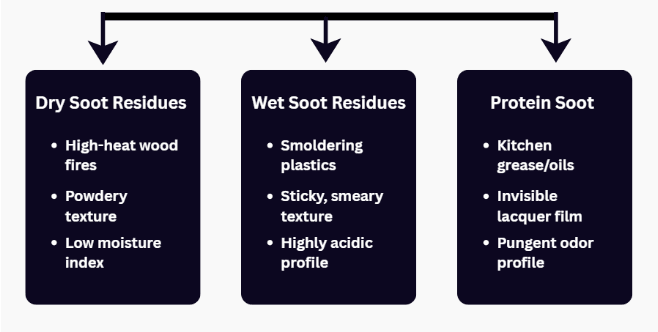
The nature of the soot residue is determined by the type of fire. Professional mitigation specialists classify soot into three main types:
- Dry Soot Residues: Result from rapid burning fires of natural wood and paper products. This soot is powdery, relatively easy to clean, and responds well to specialized dry chemical sponge techniques.
- Wet Soot Residues: These consist of smoldering, low heat fires that burn plastics, synthetics, and rubber items. This residue is sticky, smeary, very acid and strongly odorous and needs specialized chemical solvents to break it down.
- Protein Soot Residues: From burning food oils, grease, and kitchen proteins. This residue is almost invisible, but it leaves a sticky, lacquer like film on surfaces and creates a strong, pungent odor that is very difficult to get rid of without professional deodorization equipment.
The Corrosive Timeline
Soot particles are very corrosive and acidic. They cause irreversible chemical damage if left on surfaces. Within hours, soot yellows plastic appliances, stains marble or granite countertops, and discolors unprotected metals.
In days, the grout lines go permanently black, painted walls fade, and metal fixtures tarnish and pit. A seasoned fire restoration company knows this timeline and will immediately put into place specialized pre cleaning treatments to protect your home’s expensive finishes from permanent staining.
6. Professional Fire Damage Restoration Standards
Once the building is dry and stable, detailed clean up and demolition work begin. This phase shall be performed in strict accordance with industry protocols such as the IICRC S548 Standard for Professional Inspection, Cleaning and Restoration of Fire and Smoke Damaged Property. The aim is to safely remove all the contaminated elements and prepare the house for a total structural rebuild.
Precision Demolition and Sorting
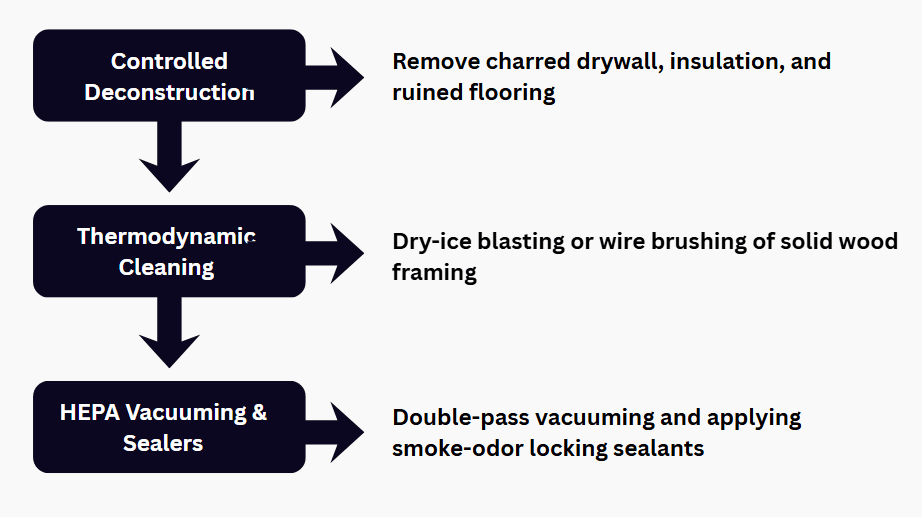
Building materials, such as charred or deeply penetrated materials with toxic soot, cannot be cleaned and need to be carefully removed. This includes burned drywall, burned wood studs, destroyed insulation, and damaged flooring.
Technicians will carefully cut out and remove these compromised materials, placing the debris into sealed disposal bags to prevent the spread of soot dust into unaffected rooms. Structural elements are preserved wherever possible to minimize demolition costs and retain as much of the original building as feasible.
Advanced Cleaning Techniques
For solid, non removable structural elements, specialists apply advanced mechanical cleaning methods for soot and embedded char removal:
- DryIce Blasting: This high tech process employs compressed air to shoot microscopic dry ice pellets at the burned surfaces. The extreme cold makes the soot and char shrink from the wood, and no secondary wastewater is generated, nor are harsh chemicals used.
- Dry Chemical Sponges: Specially manufactured sponges of vulcanized rubber that lift dry soot particles from delicate surfaces such as ceilings and painted walls without smearing the residue.
- HEPA Vacuuming: Surfaces are vacuumed using specialized vacuums with certified HEPA filters that trap fine soot particulates as small as .3 microns, keeping them from becoming airborne.
After the cleaning, structural surfaces are then coated with professional smoke odor encapsulants and sealers. These advanced coatings lock in any remaining microscopic particles, so smoke odors won’t bleed through new drywall and paint down the road.
7. Comprehensive Cost Comparison: Professional vs. DIY
Homeowners suffering unexpected fire damage will sometimes attempt a DIY cleanup to save money on deductibles. Restoration from fire and smoke, however, requires specialized knowledge, industrial equipment, and strict safety controls. Such amateur jobs often lead to hidden structural problems, long term odor problems, and denied insurance claims.
Here is a comparison of the major differences between a DIY attempt and an authorized, certified professional intervention:
Metric | DIY Approach | Professional Approach |
Diagnostic Capabilities | Basic visual inspection; cannot detect hidden soot or moisture inside walls. | Thermal imaging cameras, specialized moisture mapping, and soot testing kits. |
Water Extraction Efficiency | Standard shop vacs leave moisture behind, creating mold risks. | Truck mounted extraction equipment and commercial structural drying systems. |
Soot Removal Safety | Traditional scrubbing smears oily soot and worsens surface staining. | Dry ice blasting, HEPA vacuums, and specialized chemical cleaning agents. |
Odor Elimination | Retail masking sprays and air fresheners; odors quickly return. | Industrial thermal fogging, ozone systems, and hydroxyl air scrubbers. |
Insurance Claim Support | No documentation; high risk of claim denial or underpayment. | Full moisture logs, Xactimate estimating, and digital line item inventory. |
Long-Term Asset Value | High risk of hidden rot, ghost odors, and a drop in home resale value. | Backed by professional warranties, structural integrity is fully certified. |
Partnering with Certified Property Restoration Experts
Recovering from a fire can be very challenging, but you don’t have to go through the recovery process alone. While it may be tempting to try to do the cleanup yourself, the chances of spreading contamination, leaving behind hidden structural damage, and endangering your family’s health are too great. Professional containment, industrial equipment, and advanced restoration expertise are the keys to successful, lasting recovery.
If your property has been affected by fire, call the emergency response team at Vortex Restoration at 805-307-7128 for immediate assistance.
We are licensed and insured experts that provide 24/7 emergency board up, fast water extraction, state of the art smoke clean up, and full services throughout Ventura and Santa Barbara Counties. We work directly with your insurance adjuster to handle the documentation and claims process, returning your home to a safe, beautiful condition.