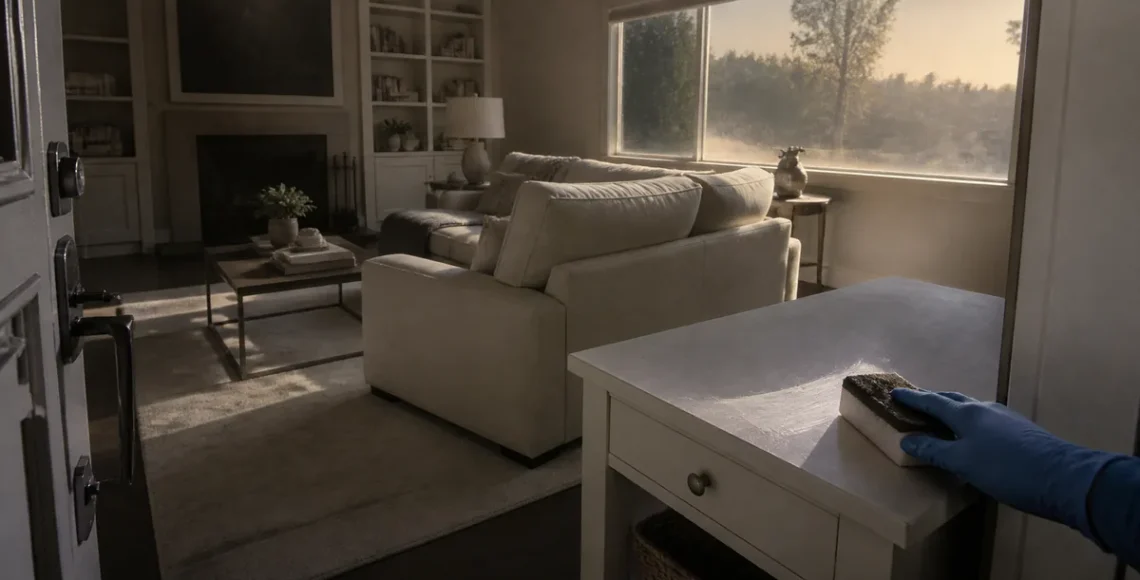
The fire never reached your street. The evacuation order lifted, you drove home, and the house was standing. Then you opened the front door and the smell hit you. That moment is where smoke remediation begins, and it is one of the most misunderstood parts of living in Ventura County during fire season.
Most homeowners assume smoke damage only happens to homes that actually caught fire. In reality, wind-driven smoke and ash travel for miles and work their way into homes through gaps, vents, attics and HVAC systems. A home can look perfectly fine and still be carrying a fine layer of soot on every surface, inside the ductwork and deep in the carpet.
This guide explains what smoke actually does to a home, what professional smoke remediation involves, what you can safely clean yourself, and when it is time to call in a team that does this work every week.
What Smoke Remediation Actually Means
Smoke remediation is the process of removing smoke residue, soot, ash and odor from a building and its contents so the space is clean, safe and odor-free again. It is different from simply airing the house out or running a few air purifiers. The goal is to remove the source of the problem, not mask it.
Smoke is not just a smell. It is a mix of gases and microscopic particles produced when wood, plastics, vegetation and building materials burn. When that smoke enters a home, the particles settle on surfaces and the gases bond to porous materials like drywall, wood, fabric and insulation. That is why the smell keeps coming back after you have opened every window and run every fan you own.
A full smoke damage restoration project usually includes:
- Inspection and testing to find where residue has settled and how far it traveled
- Removal of loose ash and soot using the right method for each surface
- Deep cleaning of walls, ceilings, cabinets, floors and fixtures
- HVAC and duct evaluation, since the system can redistribute particles through the whole house
- Contents cleaning, including textiles, furniture and personal belongings
- Odor removal that neutralizes smoke molecules instead of covering them up
- Final verification that the home is clean and the odor is gone
How Wildfire Smoke Gets Into a Home That Never Burned
Even a well-built, closed-up home is not airtight. Smoke rides the same paths as everyday outside air, and in a Santa Ana wind event, it moves with real force.
Common entry points
- Attic and roof vents. Wind pushes smoke and fine ash straight into the attic, where it settles on insulation and framing above every room in the house.
- The HVAC system. If the system was running during the event, especially with a fresh air intake open, it can pull smoke inside and distribute it to every register.
- Gaps around doors and windows. Weatherstripping wears out. Even small gaps let in a steady stream of particles over several hours or days.
- Fireplaces and chimneys. Downdrafts can push smoke and soot down the flue and into the living space.
- Open windows during evacuation. Many families leave in a hurry, and a single cracked window can let in a surprising amount of residue.
The U.S. Environmental Protection Agency explains how outdoor smoke reaches indoor air through natural ventilation, mechanical ventilation and infiltration, and offers practical steps to reduce exposure in its EPA guidance on wildfires and indoor air quality. It is worth reading before the next fire season, not after.
Signs Your Home Needs Professional Smoke Remediation
Wildfire smoke damage is not always obvious. Some homes have heavy, visible soot. Others have a film so fine you only notice it when you wipe a white cloth across a countertop. Watch for these signs:
- A lingering smoky or acrid smell that returns every time the house warms up or the air conditioning kicks on.
- Gray or black film on walls and ceilings, especially around vents, light fixtures and the tops of walls.
- Discolored or yellowing paint, grout, plastics or appliance finishes.
- Ash on window sills, door tracks and inside cabinets, including places that were closed during the fire.
- Dark streaks around HVAC registers or a smoky smell that gets stronger when the system runs.
- Irritated eyes, coughing or headaches that seem to ease when you leave the house.
- Smoke smell in clothing, bedding and curtains that does not come out after a normal wash.
If you are noticing more than one of these, the residue has likely spread beyond what household cleaning can handle.
The Professional Smoke Remediation Process, Step by Step
Every home is different, but a thorough smoke remediation project follows a consistent path. Here is what to expect when a certified team handles the work.
Step 1: Assessment and documentation
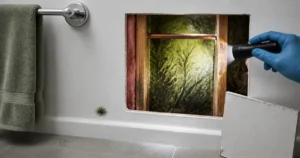
The process starts with a walkthrough of every room, the attic, the HVAC system and the exterior. Technicians identify the type of residue present, map how far it traveled and photograph everything. That documentation matters for your insurance claim, and it gives you a clear picture of the scope before any work begins.
Step 2: Protecting what is not yet affected
Clean areas are sealed off so cleaning does not push soot into rooms that were spared. Contents that need specialized cleaning are inventoried. For larger projects, belongings may be packed out and cleaned off site, then stored until the home is ready.
Step 3: Dry soot and ash removal
This is where many DIY efforts go wrong. Wiping soot with a wet rag or an all-purpose spray often smears it deeper into paint and porous surfaces, setting a stain that is much harder to remove. Professionals start with HEPA vacuuming and specialty dry sponges that lift residue off the surface before any wet cleaning happens.
Step 4: Surface-specific cleaning
Different materials need different approaches. Painted drywall, natural wood, stone, metal fixtures, glass and fabric each react differently to cleaning agents. A trained technician matches the method to the material so the surface comes out clean without damage.
Step 5: HVAC and ductwork
If smoke went through the system, the ducts and air handler need attention. Otherwise, the system will keep blowing residue and odor back into a freshly cleaned home. Filters are replaced, and the system is cleaned or evaluated depending on how much contamination is present.
Step 6: Smoke odor removal
Real smoke odor removal goes after the molecules that cause the smell. Depending on the situation, that can include thermal fogging, hydroxyl generators, sealing certain surfaces and controlled ozone treatment in unoccupied spaces. Air fresheners and candles only cover the problem, and the smell returns once they fade.
Step 7: Final walkthrough
The job is not finished until the home looks clean, smells clean and passes a final inspection. If anything still smells or shows residue, it gets addressed before the team leaves.
What You Can Safely Do Yourself, and What to Leave Alone
Not every bit of ash requires a professional crew. If you are dealing with a light dusting, there are a few things you can do right away to protect your family and your home.
Safe first steps:
- Wear an N95 respirator, gloves and long sleeves before handling ash.
- Mist outdoor ash lightly with water before sweeping so it does not become airborne, and avoid leaf blowers.
- Replace HVAC filters and keep the system off until it has been evaluated if you smell smoke at the registers.
- Wash smoke-exposed clothing separately, and do not use the dryer until the smell is fully gone, since heat can set odors.
- Keep children, pets and anyone with asthma or heart conditions out of the cleanup.
Leave these to the professionals:
- Soot on painted walls and ceilings
- Smoke odor that comes back after airing out the house
- Residue in the attic, insulation or ductwork
- Upholstered furniture, mattresses and electronics
- Any situation where you are unsure whether the residue is safe to handle
What to Throw Away After Smoke Damage
One of the most common questions after a fire event is what can be saved. A good rule of thumb: if it is porous, consumable or touches your mouth, take a hard look at it.
- Food and medicine. Discard any food, medication or cosmetics that were exposed to smoke, heat or ash, even if the packaging looks fine.
- Open containers. Anything that was open, including pet food, flour, sugar and spices, should go.
- Heavily smoked plastics. Some plastic items absorb odor permanently.
- Items you cannot clean. Stuffed toys, foam pillows and some mattresses may not be worth restoring.
On the other hand, many items people assume are ruined can be restored with professional cleaning, including hard furniture, dishes, many textiles, photographs and documents. Before you throw anything valuable away, get it evaluated. Your insurance adjuster will also want documentation of what was lost.
Smoke Remediation and Your Insurance Claim
Many homeowners policies in California cover smoke damage from a nearby wildfire, even when the house itself did not burn. Coverage details vary, so read your policy and talk to your agent. A few practical tips:
- Report the damage promptly and keep a record of every conversation.
- Photograph affected rooms, belongings and visible residue before cleaning begins.
- Keep receipts for hotels, meals, air purifiers and replacement filters if you could not stay in the home.
- Ask your restoration company for detailed documentation, including photos and a written scope of work.
Working with a restoration team that communicates directly with your adjuster can take a lot of pressure off your family during an already stressful time.
Why Local Experience Matters in Ventura County
Ventura County homes face a unique mix of conditions. Santa Ana winds push smoke deep into neighborhoods far from the fire line, coastal humidity can make odors cling to porous surfaces, and older homes in many communities have aging ventilation and weatherstripping. A team that knows the area understands how these factors affect cleanup.
Vortex Restoration is locally owned and based in Camarillo, serving homes and businesses across Ventura and Santa Barbara Counties. Our technicians are IICRC certified, we are licensed, bonded and insured, and we offer 24/7 emergency service. If you want to see the full scope of what we handle, from soot cleanup to rebuilding, visit our fire and smoke damage restoration service page.
Frequently Asked Questions About Smoke Remediation
What is smoke remediation?
Smoke remediation is the professional removal of smoke residue, soot, ash and odor from a home or business and its contents. It includes inspection, dry soot removal, surface cleaning, HVAC evaluation and odor neutralization. The goal is to eliminate the source of the smoke damage so the space is clean and safe, rather than masking the smell with fragrance.
Can my house have smoke damage if the fire never reached it?
Yes. Wildfire smoke and ash travel for miles on the wind and enter homes through attic vents, HVAC systems, chimneys and gaps around doors and windows. Many Ventura County homes that never caught fire still end up with soot on surfaces, residue in the ducts and a lingering odor that needs professional cleaning.
How long does smoke remediation take?
Light smoke damage in a single area can often be handled in one to three days. Whole-home projects involving HVAC cleaning, contents cleaning and odor treatment usually take longer. The timeline depends on how far the residue traveled, what materials were affected and whether belongings need to be cleaned off site.
Why does my house still smell like smoke after airing it out?
Smoke particles and gases bond to porous materials like drywall, wood, carpet, insulation and fabric. Airing out the house removes the smoke in the air but not the residue embedded in those surfaces. Warm temperatures and the HVAC system keep releasing the odor until the residue itself is cleaned and neutralized.
Is it safe to stay in a home with smoke damage?
It depends on the severity. Fine particles from smoke can irritate eyes and lungs and can be especially hard on children, older adults and people with asthma or heart conditions. If you notice symptoms that improve when you leave the house, it is a good idea to stay elsewhere until the home has been evaluated and cleaned.
Can I clean smoke damage myself?
You can safely handle light ash outdoors and on hard surfaces with the right protective gear. Soot on walls and ceilings, odor that keeps returning, residue in the attic or ducts and smoke-damaged upholstery are better left to professionals. Wiping soot with the wrong cleaner can smear it deeper and set permanent stains.
What should I throw away after smoke damage?
Discard any food, medication or cosmetics exposed to smoke, heat or ash, along with open containers like pet food and pantry staples. Porous items that cannot be cleaned, such as some foam pillows and stuffed toys, may also need to go. Hard furniture, dishes, many textiles and documents can often be restored professionally.
Does homeowners insurance cover smoke damage from a wildfire?
Many California homeowners policies cover smoke damage from a nearby wildfire, even if the home did not burn. Coverage varies by policy, so review yours and contact your agent. Document the damage with photos before cleaning, keep receipts for related expenses and ask your restoration company for detailed written documentation.
Does an air purifier fix smoke damage?
An air purifier with a HEPA filter helps remove particles from the air, which is useful during and after a smoke event. It does not remove soot that has settled on surfaces or odor embedded in drywall, carpet and furniture. Purifiers are a helpful tool, but they are not a substitute for professional smoke damage restoration.
How do I find smoke remediation near me in Ventura County?
Look for a locally based company with IICRC certified technicians, 24/7 availability and experience working with insurance companies. Vortex Restoration is based in Camarillo and serves Ventura and Santa Barbara Counties, including Oxnard, Thousand Oaks, Simi Valley, Ventura and surrounding communities.
Get Your Home Back to Clean, Safe and Smoke-Free
If smoke from a nearby fire has left your home smelling, dusty with ash or just not feeling right, you do not have to figure it out alone. Our team will walk through your home, explain exactly what we find and give you a clear plan for smoke remediation, along with documentation for your insurance claim.
Call Vortex Restoration 24/7 at 805-443-8055 for a free estimate. We are based at 515 Calle San Pablo in Camarillo and serve Ventura and Santa Barbara Counties.