- Allergenic mold, which creates allergy like symptoms including itchy, watery eyes, throat irritation, runny nose, and rashes
- Pathogenic mold is responsible for causing infections and is particularly harmful to those with weakened immune systems of underlying medical conditions
- Toxigenic mold is the most dangerous of the three, and can even be fatal under the right circumstances. Side effects include hormonal disruption, weakened immune systems, and damage to your central nervous system
Frequently Asked Questions
What does black mold look like?
Stachybotrys, the mold most people mean by black mold, is usually dark greenish black and looks slimy or wet when it is active, then turns powdery as it dries. It grows on materials that stay wet a long time, like drywall paper, ceiling tiles and wood after a leak. It often has a strong musty smell.
Is all black colored mold toxic black mold?
No. Plenty of common molds look black or dark green, including Cladosporium and Alternaria, and most of them are not Stachybotrys. Color alone does not tell you the species or how harmful it is. Any mold growing indoors should be removed, though, so the safer move is to treat dark mold seriously no matter its name.
What is the most common type of mold found in homes?
Cladosporium, Penicillium, Aspergillus and Alternaria are the molds most often found inside homes. Cladosporium likes fabrics, wood and the backs of toilets. Penicillium often shows up on water damaged materials and as blue green fuzz on food. Aspergillus is common in household dust and air conditioning systems. Stachybotrys is less common and needs long lasting moisture.
Can you tell what type of mold it is just by looking at it?
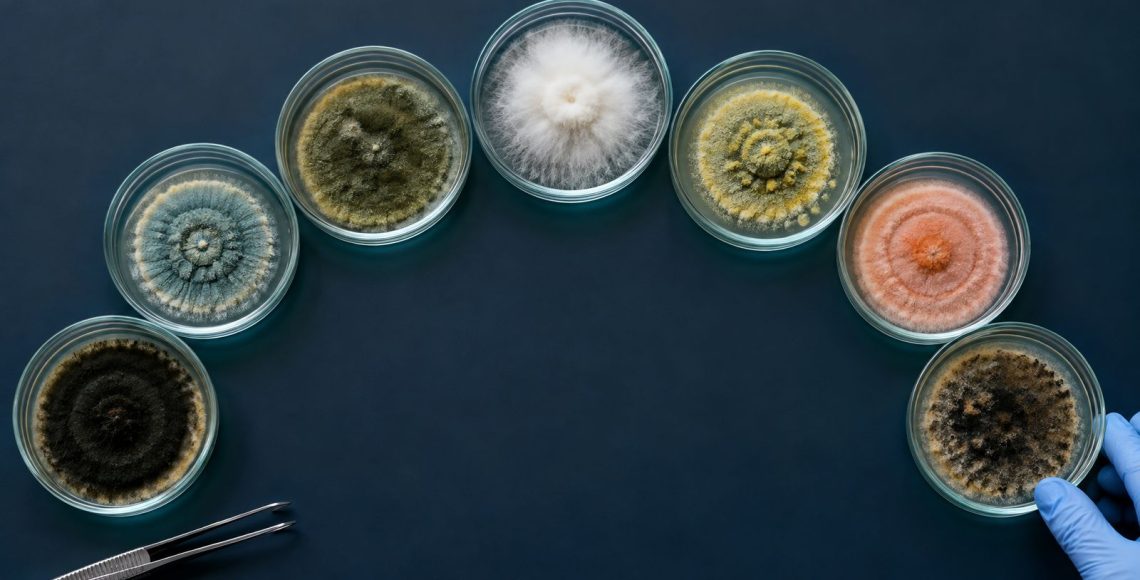
Not reliably. Many species share colors and textures, and the same mold can look different depending on what it is growing on and how wet it is. Identifying the species requires a lab sample viewed under a microscope or cultured. For most homeowners, though, knowing that it is mold and where the moisture comes from matters more than the exact name.
Does the type of mold change how it gets removed?
Not much. Industry guidelines like the IICRC S520 standard treat all indoor mold growth with the same core steps: containment, removal of contaminated materials, HEPA cleaning and drying. The size of the affected area and what materials it is on drive the plan more than the species. Toxigenic molds may call for extra protective gear, but the method stays the same.
Is it worth paying a lab to identify which mold I have?
Sometimes. Species testing helps if someone in the home has health concerns and a doctor wants to know what they were exposed to, or if you need documentation for a real estate deal or legal dispute. If you can already see mold and know the water source, testing usually does not change the fix, and that money is better spent on remediation.
What is the white fuzzy mold on wood in my crawl space?
White, cottony growth on floor joists and subfloors is usually a mold or mildew feeding on damp wood, and it is common under raised foundation homes in Ventura County and Santa Barbara County. It is easy to mistake for dust or efflorescence. It signals ongoing moisture from soil, plumbing leaks or poor ventilation that should be found and corrected.
Is the pink stuff in my shower a type of mold?
Usually not. That pink or orange film is most often a bacteria called Serratia marcescens, which feeds on soap residue in damp spots. It cleans up with regular bathroom cleaner and scrubbing. It shares the same cause as mold, though: moisture and poor airflow. Better ventilation and drying the shower after use helps keep both away.
Is mildew the same thing as mold?
Mildew is a type of mold that grows flat on surfaces, often powdery and white or gray, and it is usually easy to wipe off. Other molds are fuzzier or slimy and can grow deep into porous materials. In foggy coastal parts of Santa Barbara County, mildew on window frames and closet walls is especially common. Both mean moisture is a problem, and mildew that keeps returning often points to a bigger mold issue nearby.
Which types of mold are the most dangerous to health?
Toxigenic molds such as Stachybotrys and some species of Aspergillus and Fusarium are considered the most concerning because they can produce mycotoxins. That said, even common allergenic molds can cause real problems for people with asthma or weakened immune systems. Rather than worrying about the species, get any indoor growth handled by professional mold removal.