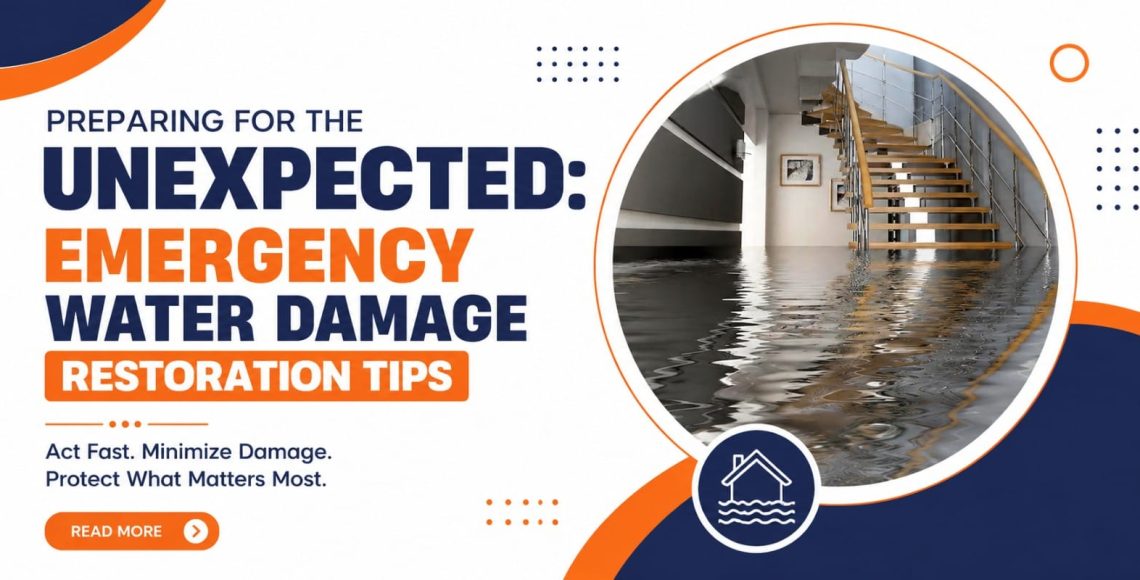
A water emergency at home can be completely overwhelming. The first few hours after a moisture intrusion are absolutely critical. Whether it’s a pipe burst behind a drywall cavity, a sudden storm surge, or a malfunctioning appliance, property structures are extremely susceptible to rapid deterioration when exposed to standing water. Knowing how to react safely, to minimize material losses, and to deploy professional resources can preserve the structural integrity of your home.
Familiarize yourself with the core mechanics of moisture mitigation, and you can turn a chaotic emergency into a controlled, step-by-step recovery process.
The Critical First Window: Immediate Safety and Mitigation
When water suddenly comes into your living area, your instinct is to start cleaning up immediately. Safety must always be your absolute priority. Before entering any flooded room, you must carefully evaluate the environment for hidden physical hazards. Pools of standing water can present serious hazards that are not always obvious to the naked eye.
Address Electrical Hazards First
Water and electricity kill. If the flooding is extensive or has reached the level of wall outlets, do not enter the area. Locate your home’s main electrical breaker panel and immediately turn off power to the affected areas. If your breaker panel is in a wet or flooded basement, don’t attempt to access it yourself. In these situations, contact your Vortex Restoration, a professional water damage specialist, to safely cut off the electrical supply to the property.
Find and Remove the Source
If the flooding is caused by some internal mechanical failure, such as a burst supply line to a washing machine or an overflowing toilet, you need to stop the flow of water at its source. Ensure every adult in your home knows the exact location of the shut-off valves for individual appliances and the main water shut off valve to your property. Turning this valve clockwise will prevent the influx of water, stopping the progression of the structural damage immediately.
Initial Containment Strategies for Homeowners
Once it is safe to enter the area and the water has stopped flowing in, you can start preliminary containment measures. These actions are designed to prevent the moisture from penetrating further into unaffected areas of the home, saving precious materials from total ruin.
Secure Your Belongings
Move portable items out of the waterlogged area quickly. Electronics, books, documents, and textiles should be kept in a totally dry, controlled room. For heavy furniture that you can’t easily move around, place some aluminum foil, small plastic squares, or wooden blocks under the legs. This prevents the wood or metal finishes from staining your carpets and prevents the furniture legs from soaking up standing water.
Don’t Use the Wrong Equipment
Do not try to use a regular home vacuum cleaner to suck up water. These consumer appliances are designed only for dry debris. Trying to vacuum up liquid can cause serious electrical shocks and permanent damage to the motor of the vacuum. Only specialized wet-dry utility vacuums are rated to safely lift standing liquid during minor spot leaks.
Understanding the Hidden Threats of Water Intrusion
Water is a very insidious element. While the visible pooling on a hardwood floor or tile surface is alarming, the real destruction often happens completely out of sight. The porous structure elements absorb moisture quickly, leading to a chain reaction of material degradation.
Capillary Action and Wicking in Structures
Building materials like drywall, fiberglass insulation, framing lumber, and concrete are naturally porous. If you have water pooling at the bottom of a wall, these materials behave like a sponge. Capillary action causes moisture to travel vertically up inside the wall cavity, far above the actual level of the standing water. If left unaddressed, this hidden moisture rots structural studs, rusts metal fasteners, and weakens the bearing capacity of wall assemblies.
The Actual Timeline of Mold Development
Mold spores are microscopic and are naturally present in the air all around us. They are completely dormant until they encounter a viable food source and moisture. Wet drywall paper, carpet padding, and wood subflooring are the perfect organic food for these spores. Proper conditions can allow mold colonies to germinate and begin colonizing structural surfaces within 24 to 48 hours of water exposure.
That is why it is so important to get professional water damage restoration services on the scene right away, to prevent a secondary environmental hazard.
The Professional Restoration Process Explained
While some initial mitigation can be performed by a homeowner, the complete drying out of a modern building assembly requires advanced industrial technology and specialized scientific principles. Certified technicians follow a multi-phase protocol approved by the IICRC to bring properties back to pre-loss condition.
Phase 1: In-Depth Inspection and Evaluation
When technicians come to your house, they don’t just guess where the water went. They use very advanced diagnostic tools to map the migration of moisture to an exact degree. Thermal imaging cameras, concealed behind walls, reveal temperature variations and show pockets of cold, trapped moisture that are otherwise invisible to the naked eye.
Meanwhile, special moisture meters are inserted into flooring and drywall to determine the exact percentage of water saturation deep inside the building materials.
Phase 2: Rapid Structural Water Removal
The quickest way to dry a building is to take away the water in its liquid form, not wait for it to evaporate. Technicians use many pieces of equipment that apply massive vacuum pressure to pull thousands of gallons of standing water out of carpet, pads, and hard floors. This mechanical extraction step removes most of the volume and significantly reduces the total drying time of the project.
Phase 3: Controlled Applied Structural Drying
After the liquid has been extracted, high velocity industrial air movers accelerate the evaporation of trapped moisture from saturated surfaces. Then, heavy duty commercial dehumidifiers suck away the moist vapor, cool it to its dew point to condense, and pump it out. This ongoing cycle creates a low humidity environment that pulls bound moisture out of structural framing.
Phase 4: Total Sanitation and Odor Removal
Water damage frequently leaves behind musty odors and microbial footprints. Professionals sanitize framing materials and concrete slabs with EPA certified antimicrobial treatments. They may also use advanced equipment, such as hydroxyl generators or ozone machines, to break down odor causing molecules at a molecular level, to neutralize causing molecules at a molecular level, restoring safe indoor air quality before your family returns to the space.
Proactive Home Maintenance: Preventing the Next Emergency
It’s empowering to know how to react to an emergency, but the true protection for your property investment is to stop moisture intrusion from happening in the first place. By adding simple, routine checks to your seasonal home maintenance schedule, you can prevent major plumbing catastrophes from ever occurring.
Replace supply lines for appliances
Common failure points are the rubber hoses connecting your washing machine, dishwasher, and refrigerator icemaker to the main plumbing walls. Over time, the rubber will dry out, crack, and explode under constant water pressure. Replace these standard factory rubber hoses with heavy duty braided stainless steel supply lines. The reinforced lines have high resistance to kinks, punctures, and pressure spikes.
Install Smart Leak Detection System
Today’s smart home technology provides amazing water mitigation tools. You can install inexpensive wireless leak sensors on the floor in the areas most at risk, such as under water heaters, under kitchen sinks, and right next to sump pumps.
If a sensor detects just one drop of moisture, it sends an alert to your smartphone right away. Some high tech systems even feature an automated main shut-off valve that cuts the home’s water supply the second a leak is found – protecting your property even when you’re thousands of miles away on vacation.
Test Your Water Pressure
A strong pressure of water feels good in the shower, but it puts extreme, constant pressure on the joints in your indoor plumbing system, the welds in your pipes, and the valves in your appliances. A simple pressure gauge on an outdoor hose bib can be used to test the pressure of your home. If the reading is over 80 PSI (pounds per square inch) all the time, it’s time to call in a licensed plumber to install a water pressure regulator so your system stays within a safe operating range.
Conclusion: Protecting Your Investment with Confidence
A sudden flood in your home can interrupt your life, but a quick and organized response can change the entire outcome for the recovery. You can shut off the water source, isolate electrical hazards, and document structural damage for insurance adjusters, minimizing structural decay from the start.
But you should never leave structural drying to chance, because water can wick deeply into hidden wall cavities and subfloors by capillary action. Sophisticated industrial diagnostics and specialized thermodynamic drying protocols are essential for effective property safety.
When there is a crisis, working with a licensed water damage restoration company means that hidden moisture is completely removed before it has a chance to feed toxic mold growth. When you call certified water damage experts who provide full service water damage restoration services, you’re equipping yourself with the tools, technology, and reassurance you need to save your property.
If you are in an emergency right now, do not wait – find a trusted, 24/7 water restoration service near me to stop the damage in its tracks and safely restore your peace of mind.