Water damage, whether it happens in your home or your office, is never fun. Whether it is a small thing, such as a leaky pipe or a bigger problem like a flooded basement, or a roof leak after heavy rain, all of this can lead to stress and damage to your property. When such a situation arises, many homeowners wonder whether they should try to fix it on their own or whether they should hire the services of a water damage restoration company.
Let us check out the pros and cons of DIY water damage fixes and professional water restoration services. This will enable you to decide whether it is safe to do things by yourself or hire a water damage expert to do the workl.
When DIY Water Restoration Makes Sense
There are only very few cases where DIY water restoration is effective:
1. Water Exposure is Minimal
In case you are dealing with only a very small amount of water, then it makes sense to do things on your own. It could just be a sink that has overflowed for a few minutes, or it could be a small appliance leak. In such cases, it is possible to handle things without hiring the services of an expert. However, if you find things a little out of control, it is prudent to go for professional water restoration as it is not only efficient but also cost-effective.
What should you do:
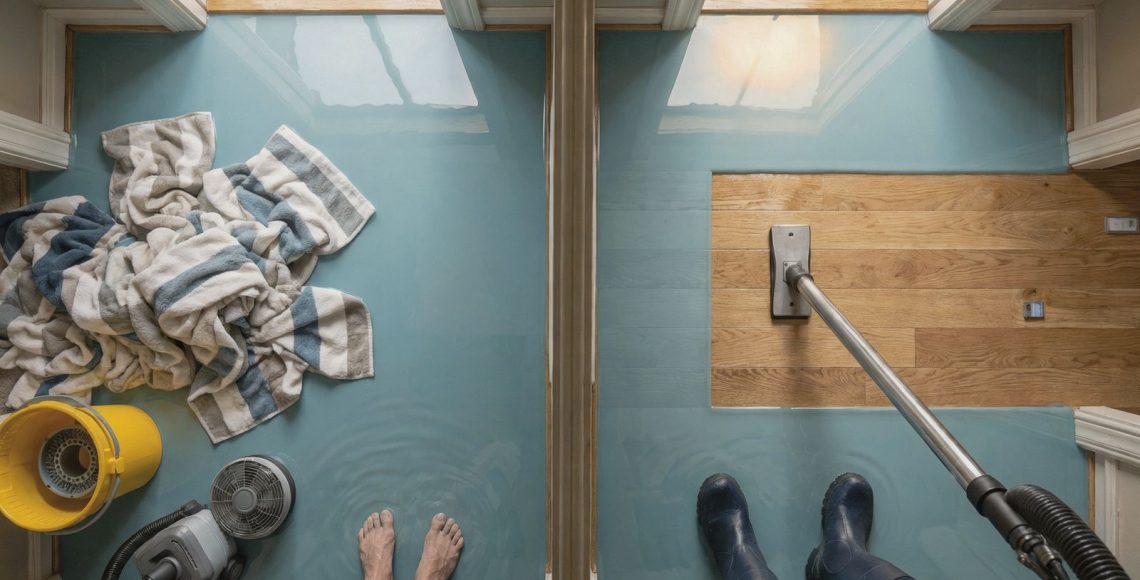
- You can use towels, mops, or a wet/dry vacuum to soak up the water that is in that area.
- Then you can set up fans and dehumidifiers. This will dry out the area.
- Get rid of any wet rugs or furniture to facilitate airflow.
2. Clean Water (Category 1)
When water is from a clean source, such as a supply line to a faucet, or there is a broken water bottle, it is usually safe to clean up things on your own, as long as it is not too much.
Even in the case of clean water, time is everything. If clean water stands for a long while, it can become contaminated, and then you must seek help from water damage experts near me.
3. When you catch the leak early
If you see any water leak, act right away without any delay. You can usually prevent it from soaking deep into materials such as drywall or flooring.

Bear in mind that it is important to inspect even a small leak thoroughly. This is done to make sure that water does not travel to places that are not visible to you. Even a small leak can cause big trouble if it gets behind walls or under the flooring. As a matter of fact, sometimes even a small error can have serious implications. You do not want to be inundated with problems just because you did not pay heed to things at the start.
When to Call the Professionals
You should seek professional help when water damage is severe or when you find it too overwhelming to do things on your own. Mentioned below are some cases where you should definitely go for professional water restoration.
1. The Water Is Contaminated
If the water source is anything other than clean, then you should stop right there and go in for professional help. This includes:
Toilet overflows (especially with waste)
Sewage backups
Floodwater from outside
These are classified as Category 2 (gray water) or Category 3 (black water) and can carry harmful bacteria, chemicals, or other contaminants.
2. There is a Huge Amount of Water Everywhere
When there are large volumes of standing water, you will require industrial-grade equipment to extract and dry things out quickly.
The longer the water stays in a place, the more damage it can cause. When water is not drained out or an area stays wet, it is more likely to promote mold growth. So do not think that you will do things on your own. Procrastination can worsen things and cause more damage than you can even imagine. Act promptly so that you do not have to repent later on.
3. You Smell or See Mold
If you notice that musty, earthy smell, or worse, you see mold growing, it’s beyond a DIY fix. Mold can be extremely hazardous to your health. It spreads very quickly if not treated properly.
Professionals not only clean the visible mold but also detect and fix the source of moisture to prevent it from coming back.
4. Water Has Reached Critical Areas
Water in walls, ceilings, subfloors, or HVAC systems isn’t something you want to mess with. These areas are difficult to access and require special tools (like moisture meters and infrared cameras) to detect and dry thoroughly.
5. Insurance Is Involved
If you are planning to file a claim with your homeowners’ insurance, then it is imperative to have a licensed water damage restoration company such as Vortex Restoration handle the situation for you. This will make the process much smoother. They will provide detailed documentation and work directly with your adjuster.

Without a doubt, hiring professionals comes with a lot of cost. But so does doing it wrong and having to redo everything, or worse, deal with mold warping floors and structural repairs down the line. When you hire a professional Water Restoration Company, you are not just paying for the work that they do for you; you get their expertise and experience.
Experts have the tools and manpower to remove water and dry affected areas much faster than any DIY approach. This quick response helps minimize damage and reduce the risk of mold. Speaking of tools, professionals use industrial-grade equipment—like high-powered dehumidifiers, air movers, and moisture meters—that are far more effective than household fans or guesswork.
Their experience also plays a key role; they know exactly where water tends to hide and how to detect hidden moisture that could lead to long-term structural issues. In addition, they take preventive measures against mold, often treating affected areas with antimicrobial solutions to stop growth before it starts. They also have experience in working with Insurance companies and can help guide you with paperwork, documenting damage, etc.
Most importantly, hiring experts gives you peace of mind, knowing that your home is thoroughly dried, safe, and restored by people who do this every day. So, do not waste time, hire the services of an expert water restoration company such as Vortex Restoration and get your work done efficiently with precision.