Frequently Asked Questions
How do I know if there is mold in my HVAC system?
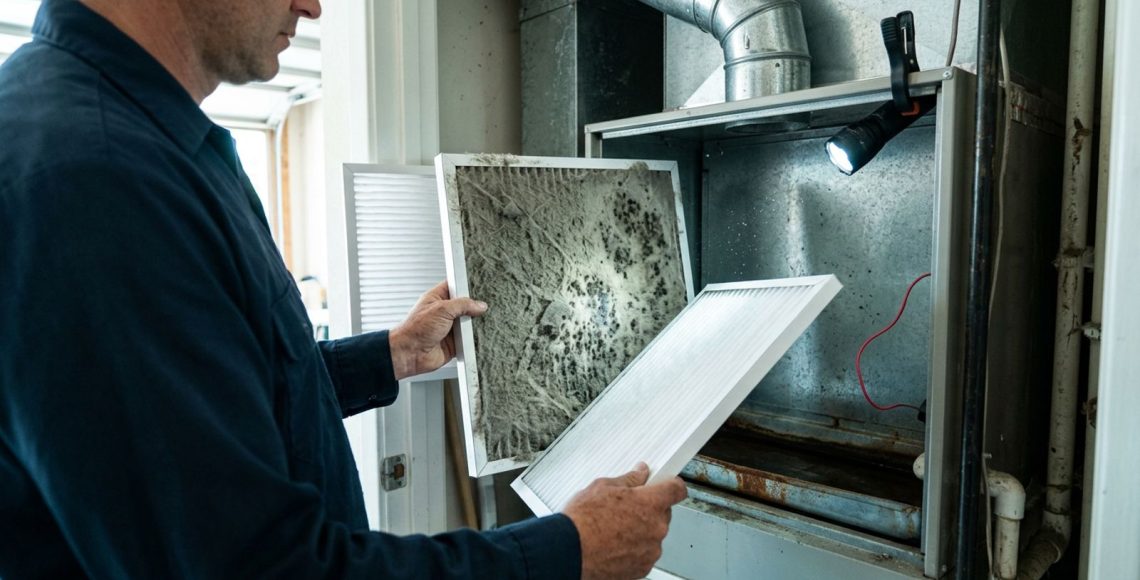
The most common sign is a musty smell that shows up or gets stronger when the air turns on. You may also see dark spots on vent covers, around the air handler, on the evaporator coil or in the drain pan. Allergy symptoms that flare when the system runs, then ease when it is off, are another strong clue worth having checked.
Can mold in air ducts make you sick?
It can. When the system runs, it blows spores through every room, which can trigger sneezing, coughing, congestion, headaches and itchy eyes. People with asthma, allergies or weak immune systems usually feel it first. The fix is not just a stronger filter. The growth has to be removed and the moisture that let it start has to be corrected.
How often should I change my AC filter to help prevent mold?
Follow the filter maker's schedule, which for many homes means every one to three months. Change it more often if you have pets, run the system constantly, or live near dust or construction. Check the filter whenever you change it. A filter that is damp, stained or smells musty is a warning sign that moisture is building up somewhere in the unit.
Can I clean mold out of my air ducts myself?
You can wipe mold off vent covers and registers, but cleaning inside ducts is not a DIY job. Household cleaners and brushes tend to break growth loose and spread spores through the house. Lined or flex ducts with mold often need to be replaced rather than cleaned. Professionals use containment, HEPA equipment and treatment approved for HVAC use.
What causes mold to grow in an air conditioner?
Air conditioners pull moisture out of the air, and that water collects on the coil and drains through a pan and line. If the line clogs, the pan overflows or the coil stays dirty, you have constant moisture plus dust for food. Oversized units that cycle on and off quickly also leave humid air behind. Poorly insulated ducts sweat, which adds more moisture.
Does running the AC fan all the time help prevent mold?
It can help air circulate, but there is a catch. Running the fan constantly when the cooling is off can blow moisture from the wet coil back into the house before it drains. For most homes, the auto setting works best during humid weather. If you prefer constant circulation, pair it with a dehumidifier and keep the drain pan and line clear.
Does a dehumidifier help keep mold out of the HVAC system?
Yes. Lower humidity means less condensation on coils and ducts, and less moisture for spores to grab onto. A whole home dehumidifier tied into the HVAC system is the most effective option, but a portable unit in a damp room helps too. Use an inexpensive humidity monitor so you know when the air is getting damp and when to run it.
Do UV lights in an HVAC system prevent mold?
UV lights mounted near the coil can slow mold and bacteria on that surface, and many homeowners like them as an add on. They do not fix the reason mold started, though. A clogged drain line, leaky ductwork or high indoor humidity will keep feeding growth in areas the light does not reach. Treat UV as a backup, not the main solution.
Does the coastal marine layer cause mold in HVAC systems?
It plays a big part. Along the Ventura County and Santa Barbara County coast, damp marine air can sit over homes for days. Ducts that run through crawl spaces under raised foundations are especially prone to condensation and mold. Sealing and drying that space with crawl space encapsulation helps keep moisture away from the ductwork.
Should I call an HVAC technician or a mold company for mold in my system?
Often both. An HVAC technician can fix the mechanical cause, like a clogged drain line, dirty coil or leaky ducts. A mold company handles the contamination itself, cleaning or replacing affected parts under containment so spores do not spread. Vortex Restoration provides mold removal and remediation and can coordinate with your HVAC contractor so both sides get handled.