
How Do You Detect Mold in the House?

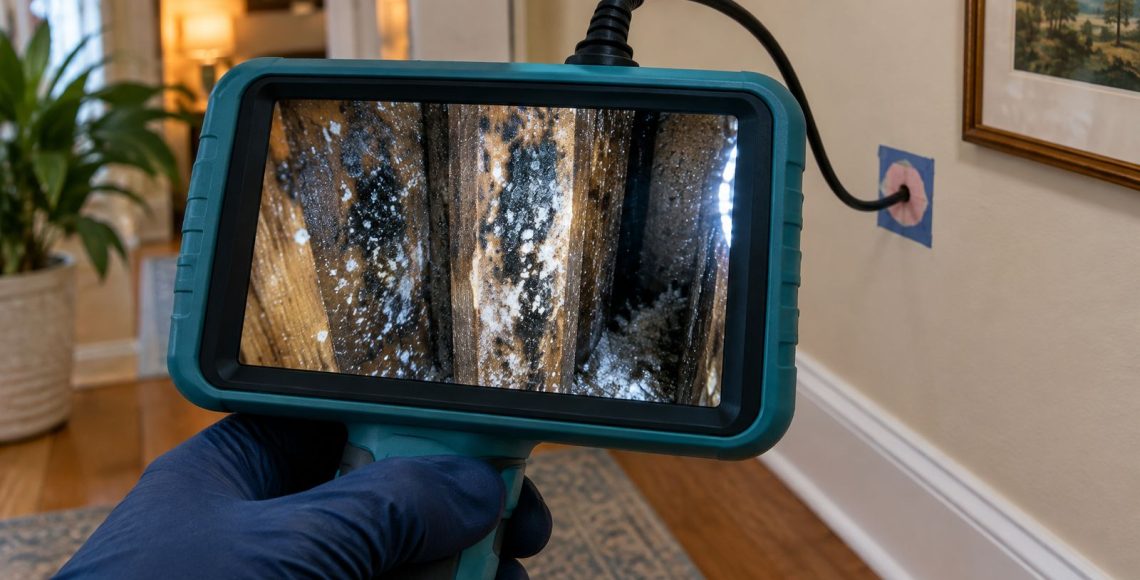
Inspection camera inserted into a small hole in a wall with its screen showing mold inside the wall cavity

Mold damage occurs when water and moisture get into your house with no way to escape, and with its highly prolific nature, it doesn’t take mold long to spread throughout your home. The mycotoxin found in some types of mold can be very dangerous to humans and wreak havoc on the structure of your home as well. There are several easy ways to detect mold in your home, and if you discover it, you can start putting into motion the process of removing the mold. Mold remediation involves an intense process and special equipment, so make sure you find a reputable and trusted mold remediation company to perform it for you. If allowed to go untreated, mold damage will cause untold problems to your family’s health and home, so you need to take care of it as quickly and efficiently as possible.

Health Problems

There are many health problems associated with mold damage and one of the easiest ways to determine you have mold is if your family starts feeling sick. There are many physical manifestations that humans experience with mold, even if you don’t see the mold itself. The most common include:

  • Runny nose
  • Sneezing
  • Lingering allergy symptoms
  • Worsening asthma symptoms
  • Headache
  • Unexplained fatigue

If you experience the above health problems, you might think it is just a cold or your allergies kicking in, but it could be a sign of a serious mold problem. Try to pinpoint whether it occurs more frequently when you are at home or in a particular room. If you find that mold is the reason for your illness, getting professional mold remediation is imperative.

AdobeStock 204673223 1024x576 1 - Vortex Restoration

Odors

There are several ways that particular odors signal that you have mold damage. A musty smell, especially in the basement, could show that you have sustained water damage and mold is starting to grow. Additionally, if your heating or air conditioning units have a bad odor emanating, this could also be a sign of mold. In general, any damp or musty smell could signal trouble and the need to have mold remediation performed in your house.

House Issues

The house itself can also tell the tale of mold. Mold can appear in many forms and colors which can creep over the walls and make your family sick. For instance, if there are dark spots or fuzzy spots on the walls, this could indicate mold damage and a need for mold remediation. Likewise, slimy green or splotchy spots could also be mold. Additionally, if your wallpaper is cracked or peeling, this could be a sign of mold damage. Mold can also occur in the grout between the tiles in your bathroom or shower area.

Spotting mold in your home is the beginning of the mold remediation process. Whether you smell a strange odor or see bizarre colorings or textures on your walls, calling a professional, reputable company to do your mold remediation is the imperative next step. With their expertise, your mold team will identify the problem, strategize a solution, and put the steps into motion to eradicate your mold. Mold damage will not be able to stand up to the stellar mold remediation strategies of your reputable company.


For more info or to schedule a consultation, contact us today at 805-443-8055

Frequently Asked Questions

Can I detect mold by smell alone?

Mold usually smells musty and earthy, a lot like damp cardboard, wet socks or an old basement. The smell tends to be strongest in closets, under sinks, near the floor or when the heat or air conditioning first kicks on. If you notice it in one area and cannot find a reason, there is a good chance something is growing out of sight.

How can I find mold hiding behind walls?

Look for stains, bubbling paint, peeling wallpaper, warped baseboards or a musty smell that is stronger along one wall. Walls that share plumbing with a bathroom or kitchen are common spots. Professionals use moisture meters, thermal cameras and sometimes a small inspection hole to confirm what is inside without tearing out more than they need to.

Can a store-bought mold test kit tell me if my house has mold?

Not very useful on their own. Most kits use a dish that catches spores from the air, and since mold spores are present in nearly every home, almost every dish grows something. They do not tell you where the mold is or how much there is. A visual inspection with moisture readings usually gives you more useful answers.

What are the first signs of mold in a house?

The earliest signs are usually a musty smell, small dark or fuzzy spots in corners, around windows or under sinks, and allergy symptoms that ease when you leave home. You may also notice condensation that keeps returning, peeling paint, or water stains on ceilings. Any one of these is worth a closer look before it spreads.

Can mold grow inside air conditioning and air ducts?

Yes. Drain pans, evaporator coils and ductwork can stay damp, especially when the system cools humid air. A musty smell when the system starts, dark spots around vents, or allergy symptoms that worsen when it runs are common signs. Mold in the HVAC system can spread spores through the whole house, so it should be inspected and cleaned properly.

Is a mold check worth adding to a home inspection when buying?

It is a smart move if the home has a history of leaks, a crawl space or basement, a musty smell, or visible stains. A standard home inspection may note signs of moisture but often does not include mold testing. For older homes on raised foundations in Ventura County and Santa Barbara County, checking the crawl space is especially worth it.

Where should I look first when trying to detect mold at home?

Common hiding spots include under kitchen and bathroom sinks, behind washing machines and refrigerators, inside window frames, in attics with poor ventilation, under carpet near exterior doors, and in crawl spaces. Anywhere water leaks slowly, condensation forms, or air does not move is a likely spot. In Santa Barbara County and Ventura County homes, closets on exterior walls are another frequent spot during marine layer season.

How much mold is too much to clean up yourself?

The EPA suggests homeowners can usually handle mold covering less than about 10 square feet on hard surfaces, as long as they wear protection and fix the moisture. Anything larger, mold in the HVAC system, mold from sewage or dirty water, or mold on drywall and insulation calls for a professional. Vortex offers free estimates on 805-443-8055.

Can a moisture meter help me find mold?

A moisture meter does not detect mold directly, but it finds the dampness mold needs to grow, which makes it one of the most useful tools for tracking it down. High readings in drywall, wood or flooring point you to the likely source. Inexpensive pin meters work for a homeowner, while pros pair them with thermal imaging for wider scans.

Why do homes near the coast in Ventura County get mold more often?

Coastal air carries more moisture, and the marine layer can keep humidity high for days at a time. In older coastal homes with single pane windows, limited insulation or raised foundations, that moist air condenses on cool surfaces and feeds mold. If you live near the coast and smell mustiness, schedule a mold inspection and remediation visit.

Share On Social

Contact Us

Follow Us

Recent Posts